

Parliamentary Committee recommends Fairer Share to the Government
Great news! This week, the House of Commons Committee for Housing, Communities and Local Government published a list of recommendations to the UK Government calling for Council Tax reform and specifically for the Government to look at replacing Council Tax with our Proportional Property Tax.
The committee, made up of both Conservative and Labour MPs, said Council Tax was becoming increasingly regressive to the detriment of deprived areas. They said that reform was "long overdue".
Committee chair Clive Betts said:
“Council budgets have been stretched for several years and the social care funding crisis is at the heart of financial pressures for many councils.
“Covid-19 has also hit councils hard and, while the government responded to the pandemic with substantial financial support, they now need to come forward with a long-term sustainable way of funding councils and the services they provide.”
Andrew Dixon, Founder of Fairer Share responded to the news, saying:
"It’s great to see our campaign getting into the heart of Westminster. We will keep up the pressure to make sure that the Government ends our terrible property taxes and creates a fairer system for everyone."
The Committee includes MPs from across England:
Clive Betts MP (Sheffield South East)
Bob Blackman MP (Harrow East)
Ian Byrne MP (Liverpool, West Derby)
Brendan Clarke-Smith MP (Bassetlaw)
Florence Eshalomi MP (Vauxhall)
Ben Everitt MP (Milton Keynes North)
Rachel Hopkins MP (Luton South)
Ian Levy MP (Blyth Valley)
Andrew Lewer MP (Northampton South)
Mary Robinson MP (Cheadle)
Mohammad Yasin MP (Bedford)
Helping the red wall doesn’t mean harming the south
This article first appeared in The Times on June 28th 2021, written by the Conservative MP for Carlisle, John Stevenson.
The Chesham & Amersham by-election result has prompted understandable concern in some quarters of the Conservative party. But while the result was a disappointment, I would caution colleagues against leaping to the wrong conclusion. Namely the idea that a focus on red wall seats has to come at the expense of those in the south.
The real story is that if the government wants to deliver on our manifesto pledge of levelling up the country, then something has to be done about property taxes. Our system is broken. Council tax hurts the poorest in society all across the country. Simultaneously stamp duty puts a brake on economic growth by
hindering transactions in the housing market, leading to an inefficient housing stock.
There is no doubt that constituents like mine in Carlisle would benefit from a fairer system. In fact, near enough 100 per cent of my constituents would benefit to the tune of £700 if the government was to scrap council tax and stamp duty and bring in a simple proportional property tax, as proposed by the Fairer Share campaign.
But seats like mine are only part of the picture. The reality of proportional property tax would be lower bills for 76 per cent of households across England,
with beneficiaries in the north and south.
Take North West Cambridgeshire where 91 per cent of households would benefit from a proportional property tax, or Bedford, the commuter town, where 89 per cent would benefit, or the cathedral city Salisbury, where 83 per cent of households would benefit. Even the inner London borough of Barking would see nearly two thirds of its residents directly benefiting from the change.
It is of course true that some wealthy parts of the south of England would see their bills rise under proportional property tax. But many southerners would see
lower bills and those who will have to pay more are predominantly the richest homeowners in the most affluent and valuable areas of the country.
Furthermore, a cap on any increase at the point of implementation of £100 per month and the option to defer payments at notional interest rates until point of sale surely insulates these homeowners from any material concerns and means that everyone who wants to will be able to remain in their present home.
What’s clear is that the current system is not working. For example, my residents who can only afford houses in the lowest band pay 1.3 per cent of their property value in council tax per year. At the same time, the wealthiest band property owners in Brighton pay just 0.1 per cent of their property value per year. This is patently unfair.
A proportional property tax would address this inbuilt unfairness without hiking up bills across the south of England. At the same time, the removal of
stamp duty and the introduction of a proportional property tax would correct broken incentives in the market — encouraging transactions and helping people to move into homes that are most suitable for their needs.
Stamp duty is a poorly-designed tax because it hinders people moving. At the top of the market in particular it is prohibitively expensive, often a cash
payment of 5 per cent to 10 per cent of the value of the property is required.
These payments stop families moving up the market as they need space for their children and disincentivises others from downsizing when their own children
move out to homes of their own or the rental market.
Across the country fewer barriers to downsizing could lead to hundreds of thousands of additional homes being freed up, helping to mitigate some of the
housing supply shortage particularly where there is greater demand, in London and the South East. And it would help young people get on to the housing ladder where it is too expensive for all but a few.
Ultimately, levelling up for one part of the country does not need to come at the expense of another and a proportional property tax would not just be of
enormous benefit to my constituents. It would also mean the end of stamp duty for everyone and lower bills for households across England, from Carlisle to
Cambridgeshire.
John Stevenson is the Member of Parliament for Carlisle.
Andrew Dixon | Council Tax Farce is Making a Mockery of Levelling Up Agenda
Boris Johnson likes to insist that his commitment to levelling up is “absolutely rock solid throughout this country”.
Yet in many parts of the country, including throughout much of Yorkshire, our property taxes tell an entirely different story – council taxes that are both rising up and levelling down.
Batley and Spen, where Labour and the Conservatives will go head-to-head in a by-election battle on July 1, is one constituency that clearly gets a rotten deal under the current system.
That’s because council tax works for the millionaires rather than the millions. It ensures that people who live in modest houses are paying a higher tax rate than those living in the wealthiest areas.
It is also hitting renters saving up for a deposit just as hard as those who have already made it onto the property ladder.
The unfairness of the current system is underlined by the fact that residents of Westminster presently pay out just 0.06 per cent of their home’s value in council tax every year.
Yet across Yorkshire and Humber this “council tax burden” leaps up to 0.76 per cent. In Batley and Spen it climbs further to 0.87 per cent.
That means we currently have the absurd situation in which residents of Batley and Spen face a council tax burden 15 times higher than people living in Westminster.
The vast majority of residents in Batley and Spen and nearby would be far better served if the Government was to scrap council tax and stamp duty and bring in a simple proportional property tax, as proposed by the Fairer Share campaign.
Set at a flat rate of 0.48 per cent of a property’s value, this tax would bring in exactly the same amount of revenue as stamp duty and council tax and would mean lower bills for 19 million households across England.
There would also be safeguards in place to ensure that only those who can afford to pay more do so.
Under proportional property tax, any increase in property tax is capped at £1,200 and those who cannot afford to pay the tax have the option to defer payments and pay a modest interest rate.
Across the UK, more than 120,000 households have signed the Fairer Share petition calling for a proportional property tax.
In constituencies near Batley and Spen, MPs have also made it clear that they believe in a fairer system of property tax, with the policy cutting across party lines.
One key supporter of proportional property tax is Kevin Hollinrake, the Conservative Party MP for Thirsk and Malton who set up the Property Research Group of MPs to fight for reform of outdated property taxes.
Earlier this year Boris Johnson was asked about the policy at Prime Minister’s Questions when it was noted that a proportional property tax “would create a transparent property taxation system, generate revenues that local government needs and ease the tax burden on hard-pressed families across the country”.
As Batley and Spen gears up for the by-election, both the Labour and Tory leaderships should take note.
If the Conservative Government is really committed to making the country fairer then support for a proportional property tax should be a no-brainer, showing voters that there is more to levelling up than mere rhetoric.
And if the Labour Party is serious about reconnecting with lost voters on July 1, how better to prove the point than getting behind a policy that would mean big savings every year for the households throughout the constituency?
With council taxes skyrocketing, what Batley and Spen does not need is an MP who toes the party line if it fails to deliver for local people.
Unfortunately, our current property tax system does exactly that and we urgently need to open the door to a fairer alternative.
Bringing in a proportional property tax would result in lower bills for 76 per cent of households across England.
In Batley and Spen it would mean lower bills for 99 per cent of households, with average savings of £650. That’s something that voters could see as a rock solid commitment to levelling up.
Andrew Dixon is the founder of Fairer Share
What Impact Does Council Tax Have On Child Poverty?
Thanks to a number of timely public interventions, most notably from Marcus Rashford, child poverty has been in the public spotlight in recent months. But how might Council Tax impact child poverty in a given area?
To provide a perspective on this, we researched the 10 constituencies with the highest increases in child poverty between 2015 and 2020. We show the Child Poverty Rate, the average Council Tax bill and the average household saving if we moved to a fairer system – the Proportional Property Tax
These are the 10 Constituencies with the highest five-year increases in child poverty:
1) Middlesbrough
MP: Andy McDonald (Lab)
Child Poverty Rate: 45.6%
Average Council Tax: £1,300
Tax Saving with Fairer Share: £850 (100% of households better off)
2) Birmingham Yardley
MP: Jess Phillips MP (Lab)
Child Poverty Rate: 46.1%
Average Council Tax: £1,100
Tax Saving with Fairer Share: £450 (95% of households better off)
3) Newcastle upon Tyne Central
MP: Chi Onwurah MP (Lab)
Child Poverty Rate: 45.4%
Average Council Tax: £1,150
Tax Saving with Fairer Share: £750 (99% of households better off)
4) Sedgefield
MP: Paul Howell MP (Con)
Child Poverty Rate: 35.9%
Average Council Tax: £1,400
Tax Saving with Fairer Share: £850 (100% of households better off)
5) Jarrow
MP: Kate Osborne MP (Lab)
Child Poverty Rate: 35.7%
Average Council Tax: £1,250
Tax Saving with Fairer Share: £750 (99% of households better off)
6) Gateshead
MP: Ian Mearns MP (Lab)
Child Poverty Rate: 38.2%
Average Council Tax: £1,300
Tax Saving with Fairer Share: £850 (100% of households better off)
7) Newcastle upon Tyne North
MP: Catherine McKinnell MP (Lab)
Child Poverty Rate: 32.6%
Average Council Tax: £1,300
Tax Saving with Fairer Share: £650 (98% of households better off)
8) Newcastle upon Tyne East
MP: Nicholas Brown MP (Lab)
Child Poverty Rate: 38.1%
Average Council Tax: £1,200
Tax Saving with Fairer Share: £700 (99% of households better off)
9) Birmingham Ladywood
MP: Shabana Mahmood MP (Lab)
Child Poverty Rate: 54.5%
Average Council Tax: £1,150
Tax Saving with Fairer Share: £600 (98% of households better off)
10) Bradford West
MP: Naz Shah MP (Lab)
Child Poverty Rate: 47.3%
Average Council Tax: £1,150
Tax Saving with Fairer Share: £600 (98% of households better off)
To see the data for all English Parliamentary constituencies, click here for Council Tax Burden and here for the impact of our reforms.
Responding to Daily Telegraph Readers’ Comments on the Proportional Property Tax
Bright Blue, a leading right-leaning think tank, has published a well-received report recommending that a new annual proportional property tax (APPT) should be introduced. Like Fairer Share’s reforms, the tax would raise the same amount for the Government as current property taxes, but more closely reflect the value of homes than the existing system that includes council tax valuations dating back to 1991.
The Daily Telegraph reviewed the reforms, highlighted the fairness of the proposals and encouraged their readers to comment.
Readers were asked: “Do you think stamp duty and council tax should be replaced? If so, what would you suggest as an alternative?”
Below are the reader’s comments and our response to their suggestions:
@Neil Thomson:
"Although reviews of stamp duty and council tax are long overdue, I don't think a property levy that hits the south of England disproportionately is fair or reasonable.
"The tax subsidy from London and the South East is too high already and is cross-subsidising the other three home nations and the north of England levelling up agenda already.
"The tax take on the south of England has increased disproportionately on income. To compound that with property taxes is punitive and represents a further disincentive to living and working in London, when the capital city has been hit very hard by the pandemic. Ministers need to think again."
Fairer Share
Fairer Share’s proposal takes these concerns seriously, balancing the advantages and disadvantages very carefully. The removal of Stamp Duty would support those in the South East, limiting the impact of reforming Council Tax on the South East and London. We also cap any increase to £1,200 additional payments per year - just £100 per month for those in the most expensive households.
It is also important to think about the broader issues facing the housing market. The current system is highly inefficient and stamp duty disincentivises downsizing. Freeing up properties through the removal of Stamp Duty would be a huge boon to the younger generations in the South East and London looking to get onto the market for the first time and for young families looking to move into homes of an appropriate size.
@TJ James:
"I have paid stamp duty on my property, which was significant. Why should double taxation be considered fair?
"We need more housing, not more tax pushing up the cost of housing. These people are living in a think tank bubble, not the real world."
Fairer Share
The biggest concern financially is those who cannot afford their homes at all because of the regressive nature of council tax, whether in the South East or in Rother Valley. This is precisely not the concern that the think tank bubble is usually considered to over-correct for.
At the point of transition from Council Tax to PPT, no household will see an increase of more than £1,200 per year. When there is a change of ownership the cap will fall away and the property will move to the 0.48% rate, but such buyers will have benefited from the removal of Stamp Duty. There would be no double taxation.
Overall Fairer Share is tax revenue neutral – this is not a tax increase overall. We are replacing the regressive Council Tax and the punitive Stamp Duty with a simple flat tax rate of 0.48% for all households (subject to the £1,200 cap). This means a fair and proportionate tax increase only for those who can afford it, while those who cannot will see a tax cut.
@Martin Thomson:
"The biggest problems with any tax based on property value that I can see are firstly maintaining a realistic valuation, and secondly that no government would then have any incentive to prevent house price inflation – in fact quite the reverse."
Fairer Share
House pricing is not centrally determined otherwise Governments may have had more success in reaching their targets of housing affordability. PPT would see tax rises in line with the value of the property. This increased tax should provide a “brake” function on any house price increases as demand for houses will be affected by the annual payments. For those who choose to afford high PPT payments because they live in mansions or multi-million pound homes, they will at least commensurately contribute to their local authority’s budgets.
Our tax also aims to help the supply problem with house price inflation. By taxing at the point of planning permission being granted, we aim to see a greater degree of development, which should contribute to house cost reductions or at least the flattening of any house price increases.
@Andrew Ryan:
"A tax raid on southern property wealth sounds like a fair idea to me, considering the current system is 'regressive' and 'distortive'. We either believe in a proportional tax system where the wealthy pay more, or we don't."
Fairer Share
We agree that the system needs addressing, although a proportional tax system would not be a raid on property wealth in the South East any more than Council Tax is currently a raid on property wealth in the North East. Council Tax is unnecessarily regressive and needs addressing. We need a fairer system whereby those with the broadest shoulders carry more of the burden.
@Alice Taylor:
"I paid property tax that was based on the value of the house when I Iived in Texas. It's a much fairer system. The outdated band system here in the UK doesn't take into account the changes in values as neighbourhoods degrade and when they regenerate. It certainly doesn't take into account the condition of the house or outside factors, like neighbours or views, that affect value.
"The present system is very regressive and a poor person living in a terrace house that is a slum pays the same as the wealthy next-door neighbour who has the highest standard interior."
Fairer Share
Well said. Many other countries have superior property taxes.
@Andrew Richards:
"If the annual tax is to be based on property values, then it’s a double whammy for anyone improving their home, and already paying VAT for improvements for the privilege.
"Property values are also market driven, so we are now in a boom period with values increasing by over 10 per cent, along with the new tax no doubt.
"Anyone expecting the new tax to reduce when property values fall is deluded.
"Many older people will live in expensive homes that they have saved for and paid for throughout their lives. Equally, their incomes will be typically far less in retirement."
Fairer Share
Andrew’s comments are a nod to Land Value Tax which we certainly believe has its merits and has many supporters both in the economic and academic communities. However, it would be punitive in London and the South East. PPT balances both the economic benefits of LVT with a politically palatable solution that all parties can get behind.
With a rate of 0.48%, the tax equates to less than 1/200th of the increased value. Would a proportional property tax truly be a disincentive to increase the value of one’s property? Such a payment would be much less than the 20% VAT rate charged on materials, so it could be argued that a proportional property tax at 0.48% per year is no more of a disincentive to improve one’s home than VAT, which is charged at 20% and is paid upfront.
For owners of high value homes the increase in tax would be capped, so that at the point of transition, no household would see a rise of more than £100 per month (£3.29 per day). We would provide these households with the option to roll over the tax payment, at a modest interest rate, until point of sale or change of ownership.
However, any debts built up as a result of deferring a payment would be considerably lower than wealth gained from rising house prices. Assuming 4.8% annual house price inflation, housing assets would increase at 10 times the speed of any tax liability. House prices would have to increase at less than 0.48% per year for the tax debt to exceed the value of the housing asset.
Just to be clear, and this is a very important point, absolutely no one will be forced out of their homes. If they live in a modest home, they will see a reduction in their tax bill. If they live in a larger property, they can either choose to pay the additional charge, which even for the largest and most valuable homes would be capped at a £1,200 increase per year or they can choose to defer payment until they sell the property.
@TJ James:
"To change the current rules would be suicide for the Tories. All those with accrued property value bought on the basis of the current rules would feel hard done by. For instance, I've paid huge stamp duty when buying my house, why should I pay more tax having already settled the stamp duty?"
Fairer Share
Under the current system, someone who is planning to buy a £1 million home will have to pay £43,750 in tax before they have even collected the keys. Paying 4.8% over 10 years with Fairer Share is better than paying 4.4% up front. And, of course, the house buyer would be paying Council Tax as well over the 10 years – this could equate to a further 3%, and probably more.
Fairer Share’s policy is revenue neutral.
The political benefits are also clear. Freeing up homes across the country through a more efficient tax system will lead to greater numbers of younger homeowners, a leading indicator of Tory support. Furthermore, with both parties competing over voters in the North and Midlands, either could offer a lower tax bill for millions of their target voters.
@Ian Gladstone:
"Many folks have to live in a particular area by nature of their employment. Why should folks who live in a modest house in a good area pay more tax than someone in a large property in not such a good area?
"Many people are struggling to pay their mortgage in a good area close to work. Let's not hit them even harder with some poorly crafted tax grab."
Fairer Share
Fairer Share’s policy is revenue neutral and please see comments above.
@Nigel Phillips:
"Council tax is a poor system, but replacing it with a tax raid on southern property wealth would create massive increases for those in lower priced housing.
"The country has to repay its debts, I agree, but launching into a totally new scheme is madness. More thought is required, with a dash of common sense added."
Fairer Share
Fairer Share’s policy is revenue neutral and please see comments above.
@Viv Oliver:
"The cost of living, particularly home ownership, in the South East already stretches normal hardworking people to the limit. We don’t need additional taxes based on already overpriced housing, and higher costs of living."
Fairer Share
Fairer Share’s policy is revenue neutral and please see comments above.
@Alan Crawford:
"The big problem is that the many people who bought recently, who upscaled to minimise the number of moves and therefore minimise stamp duty over a lifetime, are effectively taxed twice.
"Designing this fairly is much harder than people think. At a minimum you'll need a carefully designed taper based on a multitude of factors. It’s not impossible, but it will require some serious economic analysis."
Fairer Share
For owners of high value homes the increase in tax would be capped, so that at the point of transition, no household would see a rise of more than £100 per month (£3.29 per day).
@Steven Goodban:
"The current system has no doubt lost its way. With owners of very expensive properties in London paying far less than many in modestly valued properties in much poorer regions. This is not a property value tax in any shape or form.
"I quite like the idea of a property value tax along the lines suggested. Many European countries have had this in place for decades now and it seems a much fairer system."
Fairer Share
We agree Steven.
@David Potter:
"A 25 per cent reduction in council tax is, to my mind, a step in the right direction but does not go far enough.
"A property tax based on the value of the house is a retrograde step as far as I am concerned. Unless an adjustment is made for single occupancy then I am sorry but that is plain wrong. Why should a single person pay the same tax as his neighbouring house where two people are wage earners? I do not benefit from twice the services so why should I subsidise more wealthier households?
"Likewise, why would I invest in, for example, a conservatory if that means that the value of the property increases and, therefore, my tax year after year, just because of the improvement?
"If a radical tax shakeup is required why not have a local income tax which would, at least, protect those homeowners on below average incomes? Those homeowners receiving a state pension would pay little whilst those on several times the average wage would pay more."
Fairer Share
Of course, no system of property taxation will make everyone happy. But a scenario in which a small number of homeowners have enjoyed a large increase in property value and a much smaller rise in their tax bill is surely preferable to the current system under which many hard-working tenants face 5% annual increases in Council Tax whilst not benefitting from a commensurate increase in property value.
The purpose of taxation is to fund the services from which all of society benefits, whether that’s education, policing or adult care. These are core services that local government delivers and over 50% of local government funding comes from existing taxes on domestic property. Our proposal ensures that we all contribute the same fair share of our property wealth, unlike the current broken system which asks the poorest to pay proportionally more for the services we all depend upon. Whether or not you as an individual use these services should not affect how they are funded. For example, those who choose private healthcare or education cannot opt out of funding the NHS or schools.
Some have suggested a local income tax but a hard day’s work is already adequately taxed and does not address the intergenerational issues. As we know, those with greater assets find a way to reduce their income tax obligations.
Households are already paying sufficient property taxes – the problem is that the wrong households are paying the wrong taxes at the wrong times. The current inequity exists within individual constituencies, between regions, and between the generations.
There is a growing political consensus that both Council Tax and Stamp Duty need to be reformed. As we begin to look beyond Covid-19 and deal with the inequalities that the pandemic has accentuated, we should seize the opportunity to scrap both of these taxes and bring in a fair and workable system of property taxation.
Panel Discussion | Town Halls: How do we pay for them and what needs to change?
Our founder, Andrew Dixon, joined The TaxPayers' Alliance during their most recent panel discussion: Town Halls: How do we pay for them and what needs to change?
https://youtu.be/LWVr0kkpGF4
The Panel
Andrew Dixon | Our founder and the founding trustee of the Woodhaven Trust, Andrew has spent over two decades investing in small and medium businesses and is an Enterprise Fellow at the Prince’s Trust.
James Frayne | James is a Director at Public First - a public policy research agency specialising in economic and social research and opinion research. They have carried out polling on Council Tax in the past and James has written on the issue for ConHome.
Harry Phibbs | From 2006 - 2018, Harry was a Conservative Councillor for Hammersmith and Fulham. He is now a political journalist who contributes for the Evening Standard, The Guardian, and Conservative Home.
Harry Fone | Harry is the Grassroots Campaign Manager for The Taxpayers' Alliance and will chair the discussion.
Panel Discussion | Home Truths: Reforming Property Taxes in the UK
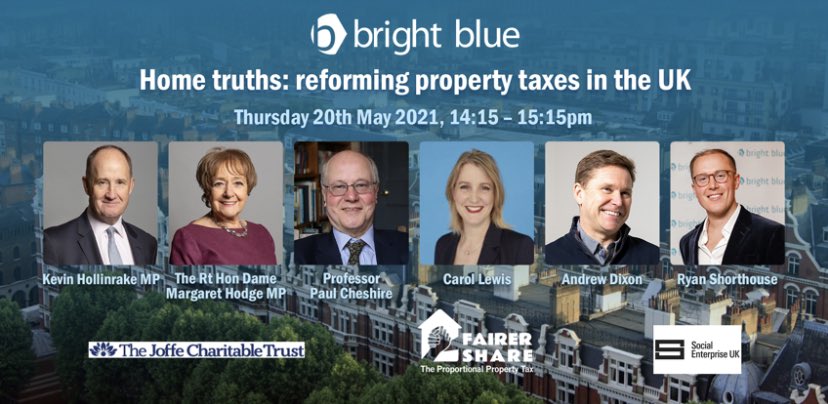
Last week, to mark the first publication from the newly formed Tax Commission, think tank Bright Blue held a panel discussion of MP's, campaigners, journalists, and academics. The panel discussed the options for a new Annual Proportional Property Tax - one of the key recommendations of the report.
The Panel
Andrew Dixon | Our founder and the founding trustee of the Woodhaven Trust, Andrew has spent over two decades investing in small and medium businesses and is an Enterprise Fellow at the Prince’s Trust.
Kevin Hollinrake MP | Conservative MP for Thirsk & Malton and chair of the Property Research Group, Kevin has been a longstanding supporter of our campaign and advocate for property tax reform.
The Rt Hon Dame Margaret Hodge MP | Labour MP for Barking and chair of the APPG on Anti-Corruption and Responsible Tax.
Carol Lewis | Deputy Property Editor of The Times and Sunday Times, Carol has written extensively about our campaign and property tax reform.
Professor Paul Cheshire | Emeritus Professor of Economic Geography at the London School of Economics and consultant to the World Bank, OECD and UN.
Ryan Shorthouse | The Founder and Chief Executive of the Bright Blue think tank, Ryan will chair the discussion.

Sam Robinson: It’s Time to Deliver a Progressive Alternative to Council Tax and Stamp Duty
This article first appeared in Conservative Home on May 21st 2021, written by Sam Robinson, Senior Researcher at think tank, Bright Blue.
As the economy gradually reopens, jobs return to the labour market, and the vaccine programme roars ahead, it looks as though – after being blown wildly off course by the Covid-19 pandemic – the Government can soon return to its central mission of ‘levelling up’.
So far, the Government has prioritised spending and investment as the key levers to levelling up. But this approach is far from new. There have been countless regeneration initiatives since the 1960s, and governments of all stripes have pledged to improve life for deprived areas of the UK.
To truly address regional disparities and deliver on its levelling up agenda, this Government will need to be broader and more radical in its approach. That means reforming tax too.
The Government could start with our regressive and arcane system of property taxation. Council Tax, which still operates on property valuations from 1991, is laughably disconnected from today’s house prices. A house in Camden that cost £320,000 in 1991, for example, could now be worth £3,650,000, and still be in the same Council Tax band.
Property taxes in their current form also punish those in low-value properties, who pay proportionately more in Council Tax than higher-value properties. A property worth £25,000 in 1991, in a local authority charging the English average Band D rate, pays Council Tax at 4.7 per cent of its 1991 value. Conversely, a property worth £500,000 in 1991 pays Council Tax at just 0.7 per cent of its 1991 value.
Geographical variation in house price increases has exacerbated this trend further. While median house prices in many areas of London have risen eightfold between 1995 and 2020, prices in towns such as Blackpool have only increased by 2.7 times. The essential point is that those in the ‘Red Wall’ and so-called ‘left-behind’ areas are therefore paying more than their fair share in terms of Council Tax.
Meanwhile, Stamp Duty acts as a tax on aspiration, slowing the housing market and making it harder for people to find the right house for them. As witnessed during the pandemic, sudden changes to the Stamp Duty regime, such as the Stamp Duty holiday, can lead to significant fluctuations and spikes in the housing market.
It is little wonder, then, that figures from across the political spectrum – Conservative, Labour and Liberal Democrat alike, as well as economists, think tanks and campaigners – are united in calling for a fundamental reappraisal of the way we tax property.
There is now widespread, cross-party agreement that our property taxes are in urgent need of reform. The key challenge now is agreeing upon a way forward.
Bright Blue’s new report, Home truths: options for reforming residential property taxes in England, comprehensively assesses and ranks alternatives to our current system on a number of economic and political criteria. The report recommends replacing Council Tax and Stamp Duty with an Annual Proportional Property Tax (APPT) levied at a flat rate on the value of houses.
The APPT would have a £50,000 exemption threshold and a 25 per cent surcharge for second home owners. The tax would be charged on owners, rather than occupiers. Revenues would be split between national and local government. The fixed national component would be set at 0.11 per cent (0.14 per cent for second homes) of property value in order to replace Stamp Duty revenues, with English Local Authorities (LAs) free to set their local tax rates independently.
To explore the possible distributional implications of a move to this APPT, the report devises five plausible scenarios for the local APPT rates different LAs might choose to set post-reform.
The impact of a move to APPT is shown in two ways. First, by illustrating the proportion of LAs where a typical resident would pay less overall in expected property tax, in a scenario where LAs each charged the same local rate, designed to yield the same revenue as Council Tax does at present. With this, 78 per cent of all English LAs would see the typical resident face a lower expected property tax liability post reform.
Comparatively, those who face a higher expected property tax payment would be a typical resident in Greater London and the South East of the country.
Second, we simulate the impact on expected property tax payments before and after the proposed reform, using different scenarios for the local APPT rates charged, on a range of houses in ten representative LAs across England. The results show a pattern of reduced expected tax liabilities for those in poorer LAs such as Newcastle, and those in less expensive housing. In the lowest-priced housing market in England, Burnley, the cheapest houses are winners in all scenarios, and houses with a price at the market median also gain in all but two scenarios.
Combining the results of all the different scenarios, 76 per cent of the lowest-priced houses in the ten LAs pay less tax from moving to APPT, and 48 per cent of median priced houses and 24 per cent of the most expensive houses would also see reduced expected property tax liabilities. It is worth bearing in mind here that house prices are not normally distributed; there are relatively few expensive properties, and many more cheaper properties.
In other words, while the current system is regressive and distortive, an APPT would change this by rebalancing expected property tax liabilities and putting money in the pockets of those from modest backgrounds and areas.
Of course, such an ambitious overhaul of the property tax system will bring with it substantial challenges, including accurate valuation. But that is not a good enough reason to continue ducking this issue. To truly address the inequities and inefficiencies of Council Tax, the Government will have to face revaluation at some point. And to avoid a gradual return to the unfair discrepancies we see today, revaluations will have to be done on a regular basis.
The challenge of regular revaluations is also surmountable in a way that it wasn’t in decades past. Price data, house characteristics, and locations are now readily available, enabling house prices to be modelled. This modelling-based approach is a practical and comparatively cheap method for calculating property taxes; indeed, at least 15 countries have already implemented statistical mass appraisal systems for use in property valuations.
The flaws of Council Tax and Stamp Duty can no longer be ignored. Moving to an APPT makes both economic and political sense. If the Government is serious about levelling up in the long term, it needs to be bold now.
Sir Vince Cable: The Case for a Proportional Property Tax
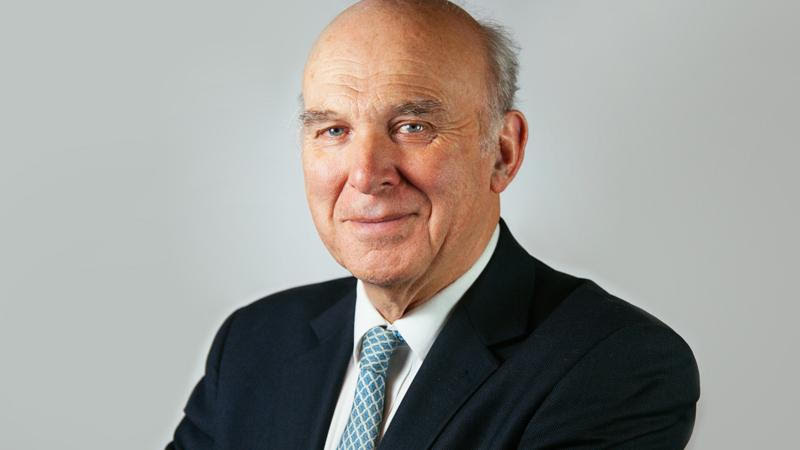
This article first appeared in Politics.co.uk on May 13th 2021, written by former Business Secretary and MP for Twickenham, Sir Vince Cable.
With local elections just past, the return of local politics after an enforced absence has focused people’s minds on local services and how they are paid for. What is blindingly obvious is that local government faces extreme financial pressures that are proving hard to escape. The problem is local government’s dependency for revenue on central government, which has been cutting back for many years now, and an unpopular local levy in the form of council tax.
With the coronavirus pandemic having put further pressure on council finances, many are having to raise council tax, sometimes substantially. As a result, millions of council tax payers are facing increases of up to 5% in their annual bills.
Taxes are only ever popular when other people pay them. But there is no escaping the need to raise more revenue locally. And there is merit in a form of taxation which, as with property, cannot easily be avoided by carting it off to the Cayman Islands. Moreover, the artificial inflation of property values as a result of emergency monetary policy – QE – means that there is some justice to taxing the windfall.
Yet, as it stands, council tax is arbitrary and unfair. Its banding is based on ancient valuations. And the bands themselves are not even proportional to property values. Lower bands pay, proportionately, far more. This adds to the sense of unfairness around the tax. At present there are eight parliamentary constituencies in which the average household pays no more than 0.2% of their home’s value in council tax. However, there are 41 constituencies in the north and Midlands in which the average household’s council tax burden is 1% or higher.
There is a solution: to reform council tax by linking it to current property values on a proportional basis. The idea is not particularly revolutionary; it is used in the United States and parts of Europe. My party has been promoting it for some time but I am pleased to see that a significant number of Conservative and Labour MPs are now behind it.
The idea also has intellectual pedigree here in the UK with prominent think tanks and campaign groups including the Institute for Public Policy Research, the Social Market Foundation, Demos, the Centre for Policy Studies and the liberal Conservative Bright Blue group all supportive. In a letter sent to the chancellor earlier this year, they said property taxes must be reformed “so that they are based on today’s property values and homeowners’ ability to pay”. And if he were alive today, I suspect that the 18th century Scottish philosopher Adam Smith would also be an advocate.
To Smith, unearned income from any non-produced resources is a social evil. In The Wealth of Nations, Smith famously wrote that the interests of those who profit from this are “directly opposite to that of the great body of the people.” As in Smith’s day, the main example we see of this behaviour is in land. Whilst the days of aristocrats controlling the majority of land are believed to have ended, half of England is still owned by less than 1% of the population. If we’re to fulfil Smith’s dream of universal opulence then we cannot allow conditions to be maintained where great swaths of land owned by a tiny minority of people can be left unproductive.
To solve this problem, Smith proposes we tax that rent. Profiting off unproductive resources like land provides no benefit to society as a whole and only serves to entrench class divisions and foster inequality. Making rent-seekers pay for their rent encourages them to begin using their land more productively, helping to create more growth.
It is important to remember that Smith was no utopian. As his biographer Jesse Norman wrote, Smith was “concerned with specific remedies”. Had a policy existed that encompassed the benefits of the land value tax in a way that was politically expedient then it is likely that he would have endorsed it. This is why, if Smith were alive today, he would be supporting the campaign for the introduction of a Proportional Property Tax (PPT).
Rather than vaguely supporting a tax on rent, famously hard to calculate, PPT would look at the value of a home and tax it at a modest amount of 0.48% as a replacement to council tax and stamp duty. This could be exceptionally useful as a vote winner, with research from the Fairer Share campaign showing that a replacing both council tax and stamp duty with a proportional property tax would mean lower bills for more than three quarters of households in England.
Recent polling by the campaign also indicates that voters would welcome more local election candidates fighting to change the residential property tax system. Four out of ten people would consider switching their vote to a party pledging to replace council tax with a fairer property tax system with lower annual bills for most people and local services maintained at the same level, they found. And in the so called ‘red wall’ areas of the country, almost half of all people questioned (49%) would consider switching their vote on this basis.
A further benefit of PPT is the abolition of stamp duty. Over the last decade an array of research has shown that stamp duty massively disincentives people buying houses. Affordable housing has become almost impossible for young people to procure. This has a powerful impact across the country — indeed, in a 2017 paper The Adam Smith Institute calculated that abolition of stamp duty could stimulate as much as £10 billion in economic growth. By abolishing stamp duty we can begin making it easier for people to move houses, helping to free up the rungs at the bottom, and thus free up the supply of affordable homes.
Opponents of a proportional property tax point to practical issues, such as annual valuations, but work done by the International Property Tax Institute shows that there is no technical problem with revaluation. Hundreds of jurisdictions use some sort of automated valuation model to aid their property tax systems, and the Valuation Office Agency already has the required data in order to implement the system itself.
Amid ministers’ talk of building back better, excuses for inaction are running out. Any tax reform has to have cross-party support to be sustainable. Proportional property tax now does, having previously been largely the exclusive preserve of the Liberal Democrats. This should not be squandered. Now is the time for all politicians to call time on council tax and get on with the job of making our residential property tax system fairer.
Sir Vince Cable

Red Brick | Council Tax is regressive and broken, fixing it would be a progressive victory
This article first appeared in Red Brick Blog on May 5th 2021, written by our founder, Andrew Dixon.
New polling by the Fairer Share campaign hints at the huge potential gains in store for a party that is brave enough to reform our broken property taxes. With local elections around the corner, four out of ten people would consider switching their vote to a party pledging to replace council tax with a fairer property tax system with lower annual bills for most people and local services maintained at the same level. In the so called ‘red wall’ areas of the country, the figures are higher with almost half of all people questioned saying they would consider switching their vote.
It should come as no surprise to see the extent to which many people are fed up with council tax. It is outdated and highly regressive, both within local areas and between them. Council tax hits the poorest residents of our society hardest while mansions or luxury apartments in Westminster or Kensington barely notice council tax, deeming it less than a service charge.
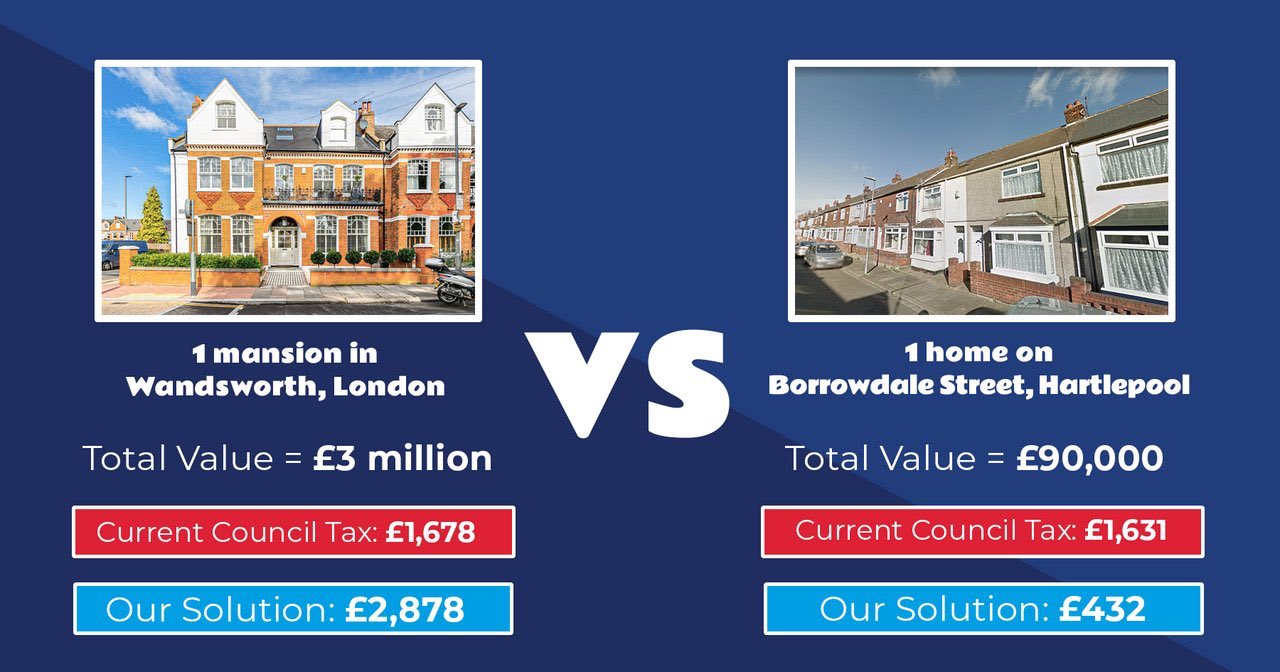
The worst hit areas are the regions of the United Kingdom once known as Labour’s heartlands, with the North East getting hammered the hardest. Hartlepool, for example, is the worst hit local authority. Residents there pay 1.31% of the value of their homes in council tax, whereas in Westminster, the average resident pays just 0.06% of their property value in council tax. That means the average resident in Hartlepool has a council tax burden 22 times that of Westminster.
Yet to talk about the regional disparities is to underplay the full extent of the problem. Council tax is derived by bands based on 1991 house valuations. The bottom bands pay a larger percentage of property value than the top bands, and houses at the bottom of each band pays significantly more than a property at the top of it.
At Fairer Share, we propose replacing council tax and stamp duty, which has a whole host of problems that hinder economic growth, with a flat property tax of 0.48% of the value of the property.
Flat taxes usually aren’t considered great progressive victories, but that is merely a reflection of the backwardness of the current system (something that shouldn’t be surprising given that portable MP3 players are five years newer than the current council tax regime).
Replacing council tax and stamp duty would be beneficial 76% of households across the UK. There are particular benefits for the poor, nearly 90% of the poorest in society and would add nearly £300 to their average net income per year. Although, facially a neutral policy, it would also have social justice implications, with our analysis showing that large majorities of households in all the UK’s major ethnic minority communities benefiting from a move from council tax to a proportional property tax.
Remarkably, this policy can be achieved without taking a penny out of the treasury’s coffers. The flat rate of 0.48% would return exactly the same revenue as that lost by council tax and by stamp duty, and helping to preserve the vital local services on which we all depend. Raising money for police or social care with regressive precepts could be a thing of the past as local authorities could flex their local rate and raise revenues more fairly from their residents.
Support for the policy is growing in Westminster. Labour’s Grahame Morris is a key supporter, having pushed Boris Johnson on the policy at Prime Minister’s Questions recently. But the policy cuts across party lines, with a number of northern Conservative MPs also supportive.
Across the UK, more than 120,000 households have signed our petition calling for a proportional property tax. A progressive Labour party should also be wholeheartedly backing the introduction of a fairer system of property tax that will deliver in real terms for the majority of voters up and down the country.
Andrew Dixon
Chairman & Founder
Fairer Share