

Fairer Share on BBC South East Politics
Today, Fairer Share Founder, Andrew Dixon, appeared on BBC Politics South East to explain why Britain’s outdated property taxes are failing families and starving councils of stable funding - and why a simple Proportional Property Tax (PPT) is the fair, modern fix.
The discussion highlighted growing momentum for property tax reform ahead of the Chancellor's Autumn Budget and the real-world impact a fairer system would have across the South East and beyond.
What is the Proportional Property Tax?
The Proportional Property Tax would replace Council Tax and Stamp Duty with a single, simple charge set as a proportion of a home’s current value. It’s designed to be fairer and more transparent than the current Council Tax System. Under Fairer Share’s proposal, 76% of households would pay on average £556 less per year, while those with the most expensive properties contribute a fairer share to local services they rely on too.
Cross-party momentum is growing
Support for fixing Britain’s broken property taxes now stretches across the political spectrum. In recent months, Labour MPs have publicly urged the Chancellor to scrap the current Council Tax system and pursue fairer alternatives, while Conservative-leaning voices and policy groups have opened the door to replacing Stamp Duty and modernising local property taxes. That consensus: the status quo isn’t working, and reform is overdue.
This isn’t a left-or-right question - it’s a fairness and growth question. A well-designed property tax, such as the Proportional Property Tax can lower barriers to moving home, support local services, and reduce regional inequalities that have widened under a system stuck in the past.
How you can help
Property tax reform is on the table nationally. Media scrutiny, cross-party interest and real pressure on council finances mean this is a live debate ahead of the Autumn Budget and your MP needs to hear from you.
Add your voice now:
👉 Email your MP in 30 seconds and ask them to back a Proportional Property Tax that replaces Council Tax and Stamp Duty.
Labour MPs call on the Chancellor to fix Britain’s broken property tax system
As the Autumn Budget approaches, one issue is rapidly climbing the political agenda - fixing Britain’s broken property tax system.
This week, 17 Labour MPs, led by Jonathan Brash, MP for Hartlepool, have written a letter to Chancellor Rachel Reeves urging her to launch a full review of property taxation ahead of the Autumn Budget.
Their message is clear: Council Tax is outdated, unfair and holding back regional equality.
A system stuck in 1991
Council Tax was designed more than 30 years ago and is still pegged to 1991 property values. In practice, that means a family in a modest home in the North of England can pay more in Council Tax than someone living in a multimillion-pound London townhouse.
The result is a postcode lottery that places the burden on working families in the North, while wealthier households in the South East don't pay their fair share.
Our analysis shows that nine of the ten constituencies with the highest Council Tax burden relative to property value are in the North, while all ten of the lowest-burden areas are in central London.
That’s not fairness - it’s a broken system that taxes the poorest more heavily than those who can afford to pay more.
Time for bold reform
The MPs’ letter calls on the Chancellor to take bold action - to launch a root-and-branch review of property taxes and to show that Labour is serious about delivering for working families.
Property tax reform could:
-
Cut unfair bills for millions of households.
-
Boost regional equality by redistributing fairly across the UK.
-
Strengthen the public finances by replacing outdated, inefficient taxes with a modern system fit for today’s economy.
As one signatory put it, adopting this would show that Labour is ready to deliver - not just talk about fairness, but make it real in people’s lives.
The solution: a Proportional Property Tax
Fairer Share’s proposed Proportional Property Tax would replace Council Tax and Stamp Duty with a simple, fair system based on the current value of homes, so those with more pay more, and 18 million households would pay less.
The average household would save £556 a year, while local councils would see their funding rise sustainably and fairly.
It’s a growth-friendly model that will level up by design.
A fair deal for every community
The MPs’ letter sends a strong message: if Labour wants to show it’s listening to ordinary families, it must start by fixing the most unfair tax in Britain.
Broken tax means broken trust. Fixing Council Tax is how we restore both.

Fairer Share featured in Tax Journal
We’re delighted that Tax Journal, the UK’s leading publication for tax professionals, has featured an in-depth article by our founder, Andrew Dixon OBE, on the urgent need for reform of property taxation.
Andrew’s article, Property taxation reimagined, sets out why the current system of Council Tax and Stamp Duty Land Tax is unfair, distortionary and outdated - and why a Proportional Property Tax (PPT) offers a fairer, simpler and more sustainable alternative.
Drawing on economic analysis, international examples and Fairer Share’s own policy work, the piece highlights:
-
How Council Tax, still based on 1991 values, punishes households in poorer regions while letting multimillion-pound homes off lightly.
-
How Stamp Duty discourages mobility, trapping people in unsuitable homes and distorting the housing market.
-
Why incremental tweaks to either tax only add complexity, and why systemic reform is needed instead.
-
How a Proportional Property Tax would replace both taxes with a fair annual levy based on up-to-date property values — cutting bills for around three-quarters of households while providing stable revenue for local government.
Being published in Tax Journal is a significant milestone: it shows that the debate on property tax reform is no longer confined to campaigners and economists - it’s now firmly on the radar of policymakers, practitioners and professionals.
You can read the full article here: Download the PDF
At Fairer Share, we’ll continue to make the case for bold reform that delivers fairness for households, stability for councils and growth for the economy.
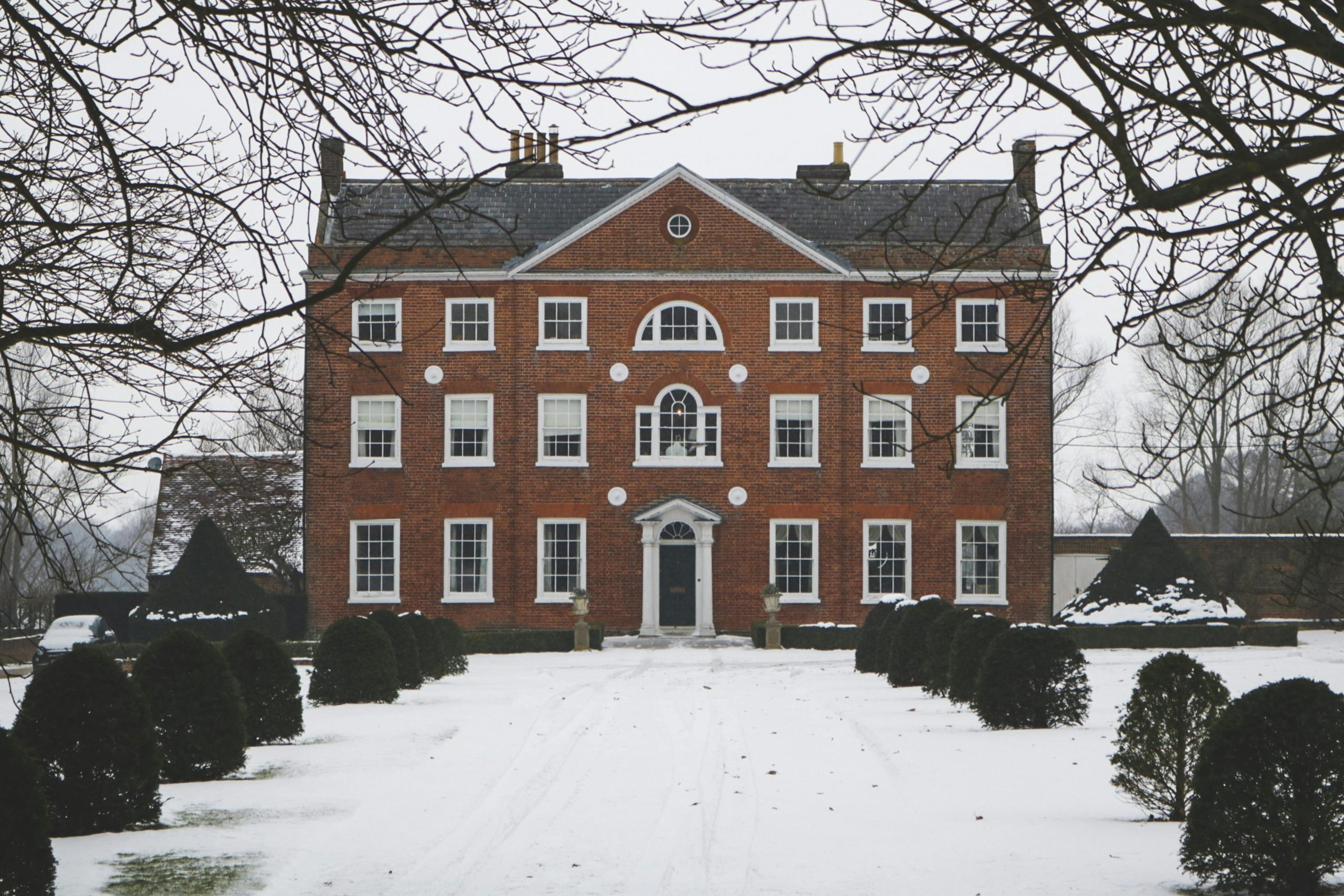
What Counts as a Mansion? Let’s Talk About What’s Really Unfair
by Andrew Dixon, Founder and Chairman of Fairer Share
The Mansion Myth
What is a mansion, anyway? James Max asks the question in the Financial Times while at the same time answering it himself. He conjures up Downton Abbey visions - 30 bedrooms, ballrooms, turrets and helicopter pads - and then tells us that a £1.5 million property in London is “just a house.”
Here’s the contradiction: Max knows perfectly well what a mansion is. Yet when it comes to paying a fair share of tax on high-value properties, suddenly the definition becomes slippery.
£1.5 Million Is Not “Just a House”
The truth is simple: £1.5 million is around 15 times the median UK house price. That’s not “just a house.” For the vast majority of people in the UK, it’s a dream they’ll never come close to. To dismiss it as ordinary, or as “Middle England,” reveals a gulf between those at the top of the property ladder and everyone else.
The Real Problem: Upside-Down Taxation
And this is where the current system is so deeply broken. Council Tax charges ordinary families in modest homes far more, as a share of their property value, than the owners of million-pound houses. Someone in a small terrace in Blackpool or Hartlepool can be paying double the tax rate of someone in a Kensington townhouse. That is upside-down taxation - and it’s corroding trust in local democracy.
The Proportional Property Tax Solution
That’s why Fairer Share is calling for a Proportional Property Tax (PPT). It’s a simple, transparent idea: properties are taxed according to what they’re worth today, not based on 1991 valuations frozen in time. Under PPT:
- 18 million households would pay less, saving the average family £556 a year.
- Those who’ve gained the most from decades of house price inflation would contribute a fairer share.
- Local councils would be properly funded to deliver the services we all rely on.
Who Really Counts as “Middle Class”?
James Max claims this debate isn’t about “soaking the rich” but about “wringing out the middle classes.” Yet his “middle class” turns out to mean households sitting on £1.5m assets. The real middle class - the millions of families earning average wages and struggling with rent or mortgages - are nowhere in his story.
The Ultimate Irony
And the ultimate irony? Max says he doesn’t mind paying for “roads, hospitals, the occasional police force”, while opposing a fair property tax that would help fund exactly these things.
Building a Fairer System
What is a mansion? The truth is that it doesn’t matter. What matters is whether our tax system reflects today’s reality or whether we let outdated council tax bands and political scare stories keep punishing those with the least.
Fairer Share’s Proportional Property Tax is not about envy, or poetry, or playing word games with “mansions.” It’s about building a tax system that is fair, transparent, and fit for the 21st century.
A Fairer Future for Property Tax: Why a Tax on the Richest Homes is Now Politically Possible
For too long, the UK’s broken property tax system has deepened inequality, hit the wrong people hardest, and left local government finances in crisis. But leading economists argue that the tide is turning. In this article, Professor John Muellbauer (Oxford University) sets out a bold but practical plan: reform the most expensive Council Tax bands and introduce a land value tax on the wealthiest landholdings.
His proposals would raise billions, ease pressure on ordinary households, and finally shift the burden onto those with the broadest shoulders. Crucially, Muellbauer argues, this kind of reform is no longer politically impossible - it is both feasible and urgently needed.
Muellbauer's thought piece: A property wealth tax is now politically feasible
High prices of houses and land have distorted the British economy, and impeded productivity growth, creating widening inequality and despair for younger generations. The time has come to begin to address this problem. For years it was thought that the influence of property owners made reform politically infeasible.
However, economic and political circumstances have changed.
The government urgently needs to announce revenue-raising measures in the Autumn Budget. There is a widespread perception that too many ‘hard decisions’ of the last year have been borne by the vulnerable and less privileged.
Proposals such as a 2% tax on total wealth over £10mn are now headline news, reflecting a greater appetite to redistribute the tax burden onto broader shoulders.
I propose a two-part solution to the fairer taxation of property, to encompass a reform of the most expensive Council Tax bands, and a land value tax on the most expensive land (including unoccupied land).
First, I propose replacing Council Tax in the top two bands, covering around 1.14mn properties in England and Wales, by an annual wealth tax of 0.5% of property value for UK taxpayers (and with a simple deferral scheme to protect cash-poor but asset-rich pensioners).
For non-UK owners, and owners of second homes in the top two bands, I propose a tax rate of 1%, lower than typical US property tax rates. Financial assets, paintings and yachts are mobile, while fixed property and land are immobile, even though their ownership may change, making their taxation more effective. To minimise the political push-back, a precise targeting of the tax is required, leaving property taxes for most voters unchanged. This part of my two-pronged proposal could raise as much as £9bn.
The dysfunction of UK housing taxes: Council Tax is unfair and Stamp Duty damages the economy
Council Tax, hurriedly put together after Mrs. Thatcher’s failed attempt to impose the Poll Tax, is based on 1991 valuations, grouped into 8 price bands and paid by tenants. It is probably the most unfair property tax in the world.
Council Tax, hurriedly put together after Mrs. Thatcher’s failed attempt to impose the Poll Tax, is based on 1991 valuations, grouped into eight price bands and paid by tenants. It is probably the most unfair property tax in the world.
Tony Blair’s New Labour, elected in 1997, missed the opportunity for a revaluation and reform. In the subsequent decade, house prices soared, especially in the South, making revaluation look more and more politically uncomfortable. Within each local authority, the poorest homes pay the highest tax as a percentage of their property value, while the richest pay the least.
Not only is this locally unfair, but the tax is also regionally regressive. The 2025-6 tax rate for a home in the top band (H) is around £5100 in Gateshead and Nottingham, but only around £2000 in Wandsworth and Westminster. Because it is undergoing renovation, Forbes House in Belgravia, reputedly worth around £300mn, escapes even this low rate.
Unfortunately, governments are nervous of wholescale reforms that affect broad swathes of voters - even if there are many more winners than losers.
This explains why Stamp Duty Land Tax (at marginal rates up to 12% and now 17% on second homes), affecting small numbers of owners each year, has been maintained, despite the damage to job mobility and economic efficiency. Losers shout louder than winners and may have more clout because of their wealth. A broad revaluation or reform proposal generates uncertainty and therefore resistance. But confining property revaluation and tax reform to the top two Council Tax bands limits both the costs of revaluation and the political push-back.
Unfortunately, governments are nervous of wholescale reforms that affect broad swathes of voters - even if there are many more winners than losers.
My proposal faces fewer obstacles to acceptance than the 2012-15 Mansion Tax proposal for properties worth over £2mn. Far fewer properties need to be revalued under my proposal. Moreover, the Automated Mass Valuation model based on transactions data from the Land Registry (currently being applied in Wales by the Valuation Office Agency (VOA)) now offers considerably lower costs and greater speed of valuation per property.
Solving the problem of the cash-poor and property rich
Crucial to any property tax reform is a simple deferral scheme to protect the cash-poor but asset-rich owners.
I propose that pensioners can opt to defer payment but with a 0.6% tax rate instead of the 0.5% for cash payers. For every year of deferral, the tax authority’s equity stake in the property would rise by 0.6%. When the property was eventually sold or transferred, payment would become due.
This avoids complex interest rate accrual and uncertainty on deferred payments. Hence, after 10 years of deferral, 6% of the value realised would be paid in tax. To avoid disincentives for those investing in low carbon-emitting homes, discounts should be available based on a home’s Energy Performance Certificate.
This new property wealth tax would replace Council Tax for the top two bands and the revenue in excess of what Council Tax would have raised would accrue to the central government. This ensures that no local authority loses from the reform. Tax collection on owners rather than on tenants would be managed by HMRC, not by local authorities.
Reform Stamp Duty Land Tax at the same time
To stabilise the transition, and for long-term efficiency, the higher rates of Stamp Duty Land Tax for properties in Council Tax bands G and H would need to fall sharply, perhaps to 5%.
As transactions rise, this source of revenue could even increase, benefitting both owners and the Treasury, though moderate falls are a possibility.
By thus improving job mobility for high earners, future employment and income tax revenue would be boosted. There would be a permanent shift in developers’ incentives, away from top-end luxury housing. Together with lower local land prices in high value areas, this should improve housing affordability more widely, especially for young families.
Serious consideration must also be given to the proposal, for example, from Lucian Cook of Savills, that recent purchasers who paid higher rates of Stamp Duty than the new rate should be given credits against future liabilities under the annual property wealth tax. However, replacing a highly progressive Stamp Duty regime with a much less progressive one combined with an annual property wealth tax that is proportional, rather than progressive, risks reducing the long-run tax take from the wealthiest part of the property sector.
To avoid that outcome, a progressive element, e.g. a higher marginal rate for the annual property wealth tax on properties valued at over £3mn would be required alongside SDLT credits.
There are likely to be moderate falls in the top-end property prices, especially in London and parts of the South East. Once prices have stabilised, there will be several benefits.
Fewer expensive properties bought by foreign investors to park money will be left empty for long periods, increasing effective housing supply. With expensive properties lower in price and lower rates of Stamp Duty, high earners - the ‘strivers’ the government wants to encourage – could more easily afford the deposit needed for a mortgage.
By thus improving job mobility for high earners, future employment and income tax revenue would be boosted. There would be a permanent shift in developers’ incentives, away from top-end luxury housing. Together with lower local land prices in high value areas, this should improve housing affordability more widely, especially for young families.
Together, these reforms would significantly relax budget constraints on the government, including on high priority infrastructure and social home building programmes. They would encourage a shift of resources away from rent-seeking and land speculation towards investment in more productive activities and assets.
A tax on high value non-residential land
Turning to the second prong of my proposal, I propose a land value tax, on the value of farm and forest land, and all unoccupied land such as land scheduled for development, at 1% on the excess of value above £40,000 per hectare. It is difficult to assess what this would raise, but at least £5bn pa, and probably more.
Economists have long considered land value taxes as the least distortionary form of taxation.
Since Mrs. Thatcher’s government, tax-advantaged farmland has become an investment vehicle for international investors as well as British elites. With low interest rates since the global financial crisis, already high prices have risen further, most of all in locations with ‘hope value’ of being granted future planning permissions.
The great mass of farmland in the UK would be exempt under my proposal, and would not even need valuation. For transparency in establishing land values, including ‘hope value’, options on land would need to be registered at the Land Registry, as the Lyons Housing Review recommended in 2014.
A tax on current market values of land in expensive locations would have widespread benefits.
It would lower prices of farmland potentially relevant for development, especially for new towns, and by introducing holding costs on undeveloped land, would incentivise development or the sale of land to public agencies assembling land for future development.
The fact that the great majority of homeowners and farmers would be untouched by these proposed reforms helps their political acceptability.
This would facilitate land value capture so that much more of the value gains from planning consents and publicly funded infrastructure accrue to society rather than to wealthy land owners. Land value capture is crucial to supporting the government’s plans for affordable housing.
The fact that the great majority of homeowners and farmers would be untouched by these proposed reforms helps their political acceptability.
Together, these reforms would significantly relax budget constraints on the government, including on high priority infrastructure and social home building programmes. They would encourage a shift of resources away from rent-seeking and land speculation towards investment in more productive activities and assets.
A summary of these arguments appeared in a Financial Times opinion piece on 31 August. For further background, this Q&A addresses many of the most common questions raised by the Council Tax reform proposal, and this working paper explains the estimated revenue gains.
Far from punishing home owners- The Fair, Modern Alternative to Britain’s Broken Property Taxes
When the Chancellor raised that property tax reform is firmly on the table this week, the response from some corners of the press was as predictable as it was dangerously misleading. Kirstie Allsopp splashed warnings that Labour was plotting to “punish homeowners” with a mansion tax by another name.
That couldn’t be further from the truth. And we’re calling it out.
The reality is that Britain’s property tax system is already broken - and has been for over 30 years. Families in modest homes are paying far more than their fair share under frozen 1991 Council Tax bands, while multimillion-pound properties in some of the wealthiest parts of the country pay relatively little. Meanwhile, Stamp Duty actively discourages people from moving, locking up the housing market and stopping families from finding homes that suit their needs.
Unfair doesn’t even begin to describe the detrimental effect these taxes have on people’s lives who are trying to make a good life for themselves, or just simply ‘get by’. But it doesn’t have to be this way.
Fairer Share is proud to have brought this debate into the mainstream by funding the research with Onward & providing the data that the policy was built on. And we’ll continue to push for the Proportional Property Tax in the UK.
Why Fairer Share’s Proposal Makes Sense
Our solution is simple: replace both Council Tax and Stamp Duty with a Proportional Property Tax (PPT), based on the current value of a home. That means no more outdated bands and no more punishing transaction taxes. Just a modern, fair, and transparent system.
And here’s the crucial part that the Daily Mail left out: 77% of households would pay less or the same under PPT, with the average household saving £556 per year. This isn’t about punishing people. It’s about correcting an imbalance that has left ordinary households carrying too much of the burden for far too long.
Built-In Safeguards
Unlike the scare stories of “mansion tax raids,” the proposals being discussed come with safeguards to protect households from sudden or unfair shocks.
- Homes that have already paid Stamp Duty won’t face the new levy until they’re next sold, avoiding any risk of double taxation.
- Councils would be guaranteed a stable funding base, with a minimum £800 contribution from every property, so local services aren’t left short.
- The system would be progressive, with national rates applying only to property value above £500,000, meaning the vast majority of homes pay less or no more than they do today.
That’s not a tax bomb. That’s a fairer, more transparent system.
Learning from Global Examples
Far from being a radical punishment, proportional property taxes are the norm across advanced economies. Countries like Australia, Singapore, Denmark, and parts of the U.S. have long recognised that funding local services this way is more sustainable, more efficient, and more just. Britain is the outlier. And it’s time for change.
Moving the Debate Forward
The Chancellor’s recognition that property tax needs reforming is welcome, and we look forward to working with the HM Treasury as they look to model different solutions. But let’s cut through the noise: the choice is not between the status quo and a so-called “mansion tax.” The real choice is between clinging to a broken, unfair system - or embracing a proven, fair, and modern alternative that works for the majority.
We were key to bringing this campaign to the forefront and we're just getting started. Not because it punishes those with more or hurts the wallets of ordinary people, but because it delivers the fairness that millions of households desperately need.
A Long Overdue Debate: Why Council Tax and Stamp Duty Must Go
Decades of Avoidance Finally Ending
After more than 30 years of political avoidance, the debate is finally happening: the Chancellor has acknowledged that the current Council Tax and Stamp Duty system is outdated and unfair. For too long, modest homes have been paying more than their fair share while multimillion-pound properties remain under-taxed. That must change.
Reeves is exploring replacing Stamp Duty with a property tax on owner-occupied homes sold for over £500,000 and considering introducing a local property tax to replace the outdated Council Tax, which still relies on 1990s property values. This is tied to the aim of providing fairer, more sustainable funding for local authorities.
Fairer Share’s Role in Shaping the Debate
This is exactly what Fairer Share has championed from the very beginning. And today, we are proud to have played a central role in making this conversation possible by providing both the funding and the robust data that underpinned Onward’s analysis, now referenced at the heart of the national debate.
The Case for a Proportional Property Tax
While tweaks to the current system are being discussed, the answer is clear: the Proportional Property Tax (PPT). PPT would replace Council Tax and Stamp Duty in one go, creating a simple, fair, and sustainable tax system based on real property values. No more outdated 1991 valuations. No more unfair burdens on people in modest homes while the wealthiest get away with paying less than they should.
Backed by Public Support
Our polling shows strong support across the political spectrum. In fact, households will make an average saving of £556 each year under PPT. At the same time, councils would receive stable and sufficient funding to deliver the local services we all rely on, from schools and libraries to social care and community spaces.
Time for Labour to Deliver
This reform is long overdue. It’s a no brainer for Labour to adopt. By delivering a Proportional Property Tax, the Government can finally put fairness at the heart of our property tax system, ensuring people contribute based on what their homes are really worth, not what they were worth in 1991.
Looking Ahead
Fairer Share looks forward to working closely with the Labour Government to deliver this much-needed change and create a modern property tax system that reflects fairness, funds services sustainably, and restores trust in how we pay for our communities.
The Government Consultation on Council Tax Administration: A Step in the Right Direction
On June 20, 2025, the Ministry of Housing, Communities and Local Government launched a long-overdue consultation on modernising council tax administration.
The government acknowledged that current rules haven’t been meaningfully updated in decades and openly invited ideas to create an improved system. We gratefully took the opportunity to put forward our proposal for property tax reform for a system that's fairer, more efficient, and better aligned with local needs.
They’re asking for views on several improvements, including:
-
Payment plans & billing changes – Expanding default council tax payments from 10 to 12 monthly instalments and improving bill transparency to support household budgeting.
-
Support system overhaul – Refreshing outdated supports like mental impairment discounts and care‑worker exemptions.
-
Smarter enforcement – Adjusting liability order timelines and capping associated charges to avoid trapping people in unmanageable debt.
-
Efficiency gains – Encouraging councils to embrace innovation and reduce internal barriers.
-
Local funding fairness – Part of a holistic review aimed at reshaping how councils are financed via the “Fair Funding Review 2.0”
This signals government recognition that council tax is severely broken and they’re seeking constructive input, which we welcome greatly.
Fairer Share’s Submission: Pragmatic, People-Centred & Fair
We responded to Question 32—"How can we ensure council tax is paid fairly and efficiently?"—with solutions addressing root causes of the system’s failures:
1. Shift liability to property owners, not tenants
Currently, councils chase 9.3 million renters - an inefficient and often fruitless task. Instead, moving responsibility to the 513,000 private landlords and 1,600 social providers would improve collection, Reduce admin costs (saving an estimate £400 million/year), and align liability with ownership, similar to business rates.
2. Introduce an optional deferment scheme
For households that are asset-rich but cash-poor, such as pensioners, allow them to defer payments (with modest interest), due only when a property is sold or inherited. This mirrors successful models in countries like Denmark and protects vulnerable households without cutting public funding.
3. Update 1991 valuations
Our proposal is to replace unreliable, outdated council tax bands with market‑linked property valuations or modern proportional bands. This would:
-
Restore accuracy and public confidence,
-
Improve perceptions of fairness,
-
Boost voluntary compliance.
4. Integrate digital systems
By syncing council tax with HMRC and DWP data, councils can proactively identify hardship situations, reduce fraud or errors, and direct support more effectively.
5. Embrace shared admin systems
Many councils duplicate back-office systems. We suggest pooling infrastructure so councils can focus on local leadership—not repetitive admin.
6. Move away from bailiffs
Enforcement via bailiffs adds financial and emotional strain on struggling households. We propose:
-
Creating local “breathing space” repayment plans,
-
Shifting to income-based recovery models. This supports repayment without punitive escalation.
Why This Matters
We applaud the government for opening the door to reform but piecemeal changes won’t be enough. Fairer Share’s submission shows how structural, system-wide redesign can address chronic issues:
- Ridiculously high arrears? Solved by simplifying who pays.
- Outdated valuations? Fixed with real-time property data.
- Harsh enforcement? Replaced with fairness-focused recovery.
- Council fragmentation? Tackled with shared digital infrastructure.
By reassigning liability, introducing deferment, and modernising billing, we can dramatically reduce costs, increase compliance, and protect families in hardship, all while funding vital local services sustainably.
What Happens Next?
The government will review consultation responses and draw up a formal plan, expected in the coming months as part of its “Fair Funding Review 2.0”. Fairer Share is calling for the solutions our submission outlines to be adopted in full.
A System Fit for the 21st Century
Council tax reform isn’t just a policy exercise - it’s a test of our ability to support local communities fairly and sustainably. We suggest brought real-world solutions: moving liability to owners, protecting vulnerable individuals, updating valuations, and removing punitive bailiff tactics.
This consultation is a golden opportunity. We look forward to working with government and councils to make council tax what it should be: simple, fair, and reliable.

Press Release: Fairer Share Calls on Government to Go Further on Council Tax Reform
London, 23 June 2025
Fairer Share has welcomed the Government’s recognition that the council tax system is outdated and in urgent need of reform, but warns that the measures announced today* fall far short of what is needed to deliver genuine fairness and sustainability in local government finance.
The Government's proposed “council tax shake-up” aims to adjust funding allocations to support councils serving more deprived communities. While we support the principle of redistribution, we argue that this approach merely reshuffles the burden within a regressive and broken system, rather than addressing its fundamental flaws.
Andrew Dixon, Founder of Fairer Share, said:
“This announcement is an admission that the current council tax system is not fit for purpose. But rather than tinkering with allocations, the Government should be replacing the entire framework with a modern, proportionate approach that taxes homes based on their actual market value. A Proportional Property Tax would ease the cost of living for millions, reduce regional inequality, and provide sustainable funding for councils across the country.”
Our flagship proposal - the Proportional Property Tax (PPT) - would:
- Replace Council Tax and Stamp Duty with a simple annual levy of 0.48% of a property’s value;
- Deliver an average annual tax cut of £556 for 19 million households;
- Generate £5.6 billion in surplus revenue to reinvest in public services;
- Provide stable, predictable income for local councils, supporting multi-year financial planning;
- Ensure fairness by taxing empty and second homes at a higher surcharge rate of 0.96%, a move that would benefit local communities in high-demand areas such as the South West.
Polling shows the policy is three times more popular than opposed, with strong backing across political lines.
Dixon added:
“It’s encouraging to see consensus emerging that council tax needs reform. But voters are tired of half-measures. If the Government is serious about levelling up, easing the cost of living, and funding social care sustainably, it must go beyond patchwork fixes and commit to bold, systemic reform.”
ENDS
* https://www.gov.uk/government/news/council-tax-shake-up-to-deliver-fairer-billing-and-support
Setting Local Government Free: Why the Proportional Property Tax Empowers Councils
In recent weeks, growing alarm over the fragility of local council finances has sparked debate - not least over whether replacing Council Tax with a national Proportional Property Tax (PPT) would risk further centralising power in an already overextended state. It is a fair question. But it also reveals a fundamental misunderstanding of what Council Tax is today, how distorted and inequitable it has become, and how the PPT can enable, not suppress, local democracy.
Council Tax: Local in Name Only
Let us be clear: Council Tax is not a local tax in any meaningful democratic sense. It is based on property valuations frozen in 1991, determined and maintained by central government. Local authorities operate within a rigid framework set by Whitehall, with limited discretion over bands, caps on increases, and ever-increasing complexity in exemptions and subsidies.
This is not localism. This is an outdated, opaque, and centrally imposed tax that punishes those in modest homes in low-income areas, and protects million-pound property owners in high-value postcodes.
A Smarter, Fairer Foundation
The Proportional Property Tax, in contrast, brings fairness, transparency and simplicity. It links what people pay to what their property is actually worth today, a principle that should be the bedrock of any serious property taxation system. Crucially, it does not remove fiscal responsibility from councils; rather, it provides them with a broader, fairer, and more sustainable tax base from which to deliver services.
Under PPT, local authorities retain discretion over how to spend the funds they raise. Fairer Share has always been open to local calibration mechanisms - such as local multipliers, hardship relief schemes, or ring-fenced supplements for infrastructure. Councils could have more tools, not fewer, under a modernised system.
Empowering Councils, Not Undermining Them
Our proposal empowers local government not just with better funding, but with a mandate to be honest and transparent with their residents. The current Council Tax system thrives in shadows - with arbitrary banding, invisible subsidies, and bewildering bureaucracy. PPT, by contrast, is built to be clear and accountable.
It is also worth addressing the broader political fear: that reform will be used to consolidate control in Westminster. That is neither our aim nor our recommendation. In fact, we see PPT as an opportunity to spark a genuine fiscal devolution conversation. Give local authorities a modern revenue base, and then let us talk about what powers should follow.
The Real Threat to Local Democracy
The real overreach is clinging to a system that no longer works, and pretending that inaction is a defence of localism. It is not. Local government is being hollowed out by stealth, forced into impossible budget decisions under an archaic tax regime that penalises prudence and entrenches inequality.
Give councils the foundation they need to thrive. The Proportional Property Tax is not about centralising power. It is about setting local government free.