


Fairer Share in The i Paper: Burnham Wins Backing to Scrap Council Tax
We welcome growing political support for urgent reform of Council Tax, following coverage in The I Newspaper highlighting Andy Burnham’s backing for a fairer property tax system thanks to our work.
The article also included supportive comments from Jonathan Hinder MP and Jonathan Brash MP, adding further weight to our calls for a fairer, more modern property tax system.
Council Tax is still based on property values from 1991, leaving households across the country paying unfair and outdates rates. Sign our petition calling for an independent review of Council Tax and Stamp Duty, and for a move towards a fairer, simpler property tax that better reflects today’s housing market.
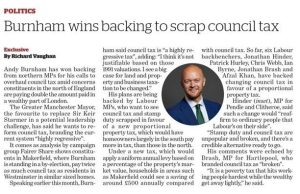
You can read the full press release below.
Six Labour MPs have today backed Andy Burnham’s call for property tax reform, as new analysis from campaign group Fairer Share reveals Makerfield constituents pay twice the council tax of Westminster residents in similar properties.
The frontrunner to replace Keir Starmer said he wanted “reform of council tax” at his by-election campaign launch, calling the current system “highly regressive” and its 1991-based valuations “not justifiable”. He has previously highlighted how the status quo benefits wealthier home-owners over lower-income families, noting: “You can be paying much more council tax in a Band D house in Greater Manchester than in some of the very wealthiest parts of London.”
One Labour MP called council tax "an idea whose time has come”, while another said a proportional tax would tackle rising household bills more than the “tinkering” with council tax that government began consulting on last week. The six MPs are Jonathan Hinder, Patrick Hurley, Chris Webb, Ian Byrne, Jonathan Brash and Afzal Khan.
Analysis by Fairer Share, the national campaign advocating for a Proportional Property Tax to replace both council tax and stamp duty, shows a standard Band D property in Makerfield faces a council tax bill of £2,152 this year. This is more than double the levy on residents in a Band D property in Westminster, who pay just £1,048. Households living in £280,000 homes in Makerfield pay more Council Tax than owners of £10 million properties in Westminster. The effective property tax rate on the Makerfield home is around 0.75%, compared with just 0.02% for the Westminster mansion.
Fairer Share research also shows the average Makerfield household would save £500 a year under a Proportional Property Tax, a uniform annual levy based on a percentage of property’s value. Over 98% of households in the Greater Manchester constituency would be better off. Meanwhile an MRP poll carried out in 2022 by JL Partners showed residents of Makerfield overwhelmingly supporting a Proportional Property Tax (59% in favour versus just 8% opposed).
Jonathan Hinder, Labour MP for Pendle and Clitheroe, said:
“A Proportional Property Tax would reaffirm to ordinary people that Labour's on their side, putting pounds in their pockets without costing government a penny. Stamp duty and council tax are unpopular and broken, and there’s a credible alternative ready to go. A PPT could redistribute to lower-income and ordinary families within Labour’s fiscal rules. It’s an idea whose time has come.”
Patrick Hurley, the Labour MP for Southport, said:
“People in Southport know the council tax system is unfair because they feel it in their pockets every year. Figures from Fairer Share show we’re paying around a third more than the national average when you look at it as a share of property value. That just isn’t right. Families here work hard and shouldn’t be asked to shoulder a bigger burden than wealthier parts of the country.”
Chris Webb, Labour MP for Blackpool South, said:
“The Chancellor rightly highlighted at the Budget how properties in Blackpool pay £300 more council tax than £10 million mansions in Mayfair, exposing a system that entrenches unfairness and deepens inequality. The government’s current proposal of a surcharge on £2 million homes is a start, but we need to go further.
“With consultation underway, and voters clearly demanding action that puts our residents first, we should be far bolder and move faster to deliver real fairness. A system this flawed doesn’t need tinkering, it needs transforming. A proportional property tax would be a fairer system that eases pressure on households who are being squeezed by rising living costs, especially at a time when global instability is driving bills higher and stronger action on the cost of living is needed more than ever.”
Ian Byrne, Labour MP for Liverpool West Derby, said:
“Andy is right council tax is regressive and needs reform. My constituents pay a higher rate than some of the richest people in the UK thanks to an outdated and broken system. We could announce a comprehensive review of the property tax system, to put money in people’s pockets, end this inequality and deliver the change communities are crying out for."
Jonathan Brash, MP for Hartlepool and chair of the council tax reform APPG, said:
“Council tax is broken. It is a poverty tax that hits working people hardest while the wealthy get away lightly. Hartlepool, like Makerfield, shows just how rotten this system has become. Families in ordinary two-bedroom homes are paying more than people living in million-pound mansions in Westminster. That is not fair. It is a national scandal.
“The APPG has heard time and again how this outdated system punishes people who are already struggling to get by. Enough is enough. We need to scrap council tax and replace it with a fair system that works for every community in the country.”
Afzal Khan, Labour MP for Manchester Rusholme, said:
"Andy is right - the council tax system is outdated and disproportionately burdens those who pay outside of London and the South East. Replacing council tax, stamp duty and bedroom tax with a much fairer proportional property tax would make over 18 million households better off. This includes over 90% of households in my constituency, who’d save an average of £500."
Andrew Dixon, Chair of the Fairer Share campaign group said:
“Andy Burnham has struck a chord. Replacing Council Tax and Stamp Duty with a Proportional Property Tax is hugely popular in Makerfield. It would benefit the vast majority of households in the constituency, and address one of the core inequalities and injustices at the heart of our tax system. It’s an idea whose time has come with government consulting on council tax reform and the Iran crisis pushing up energy and food bills.
“The Greater Manchester mayor has said we can ‘come up with a proposal where Left meets Right on this’ - a PPT is that proposal, with support spanning not only the Labour benches but the Tory chairman too.
“The UK already has the highest property taxes in the OECD. Replacing an outdated and inherently regressive council tax system will create a fairer system that doesn’t need to increase the overall tax burden. Meanwhile replacing stamp duty would improve labour mobility, support downsizing and help households move to homes that better suit their needs.”
Last October 13 Labour MPs – led by Jonathan Brash, MP for Hartlepool - wrote to the Chancellor urging a full review of property taxation, before think tanks from the IPPR to Onward and the Adam Smith Institute also united in November to condemn council tax and stamp duty. A PPT is said to have been seriously considered at the last Budget, with the Prime Minister’s economic adviser Minouche Shafik a reported supporter.
This month Paul Johnson, former IFS director, endorsed the government petition to review council tax and stamp duty, saying: “Any government serious about both growth and fairness would have this top of their agenda.” Over 27,000 signatories have now signed the petition.
Support for reform is increasingly crossing political boundaries as voters recognise that a tax system based on 1991 property values is no longer sustainable. Britain’s property taxes now raise more revenue than any other OECD country, yet many households continue to face highly regressive outcomes. Council tax arrears have now risen above £8 billion, highlighting growing pressure on households and the need for reform.
NOTES:
Fairer Share research also shows even residents of the lowest-value homes in Makerfield face twice the bills of their Westminster counterparts, with Wigan Council charging Band A properties (the most common locally) £1,435. Westminster charges just £699.
More information on how a PPT would work can be found on Fairer Share’s website.
In Liverpool West Derby, constituency of Ian Byrne quoted above, Fairer Share data finds the average household would save £750 from a PPT, with 99% of households better off. In the constituency, the public back the measure by 58% to 5% opposed.
In Pendle and Clitheroe, constituency of Jonathan Hinder quoted above, Fairer Share data finds the average household would save £800 from a PPT, with 99% of households better off. In the constituency, the public back the measure by 59% to 8% opposed.
In Blackpool South, constituency of Chris Webb quoted above, Fairer Share data finds the average household would save £750 from a PPT, with 100% of households better off. In the constituency, the public back the measure by 57% to 7% opposed.
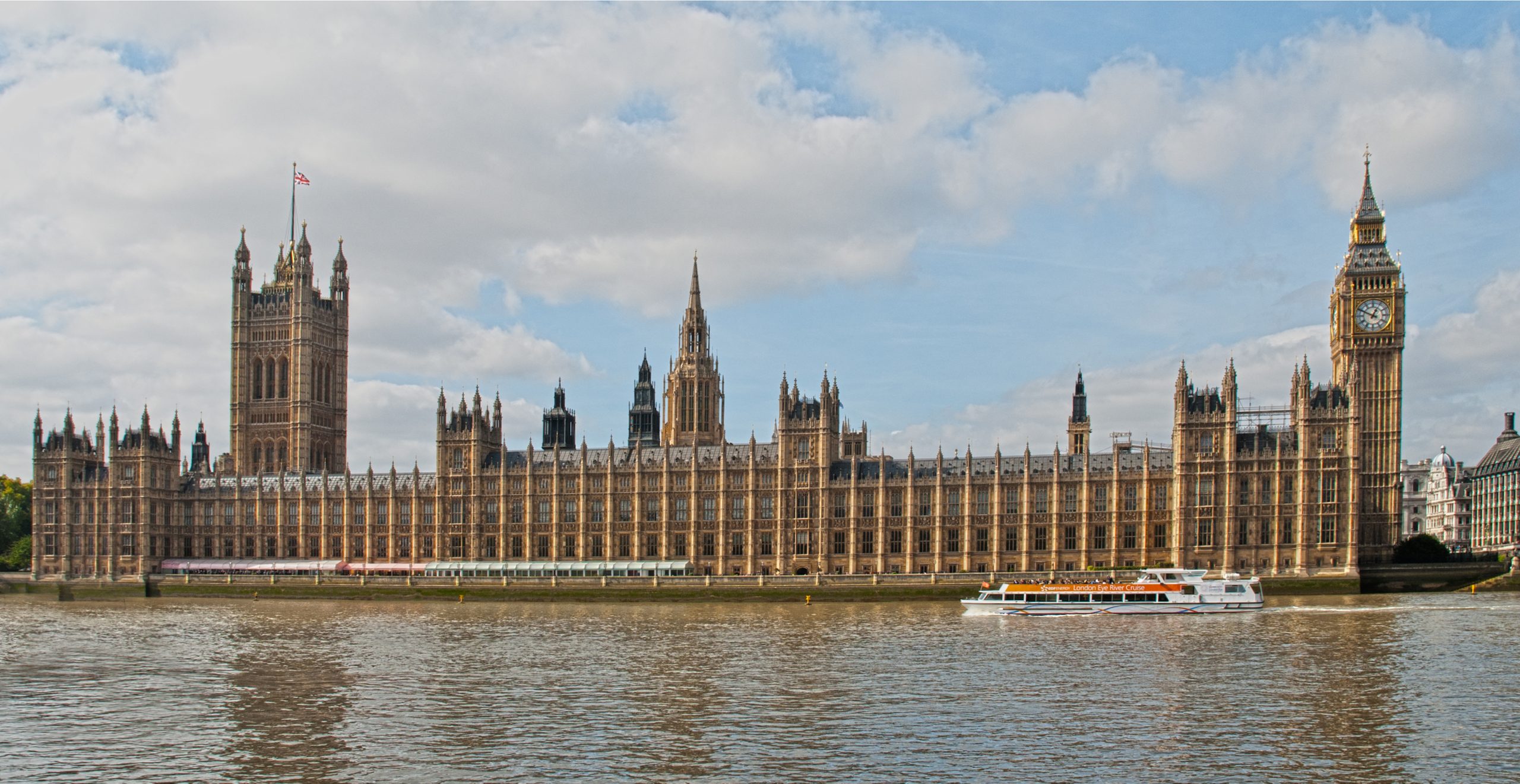
10,000 Signatures In - Government Defends the Indefensible on Property Tax
Now that our petition calling for a full, independent review of property taxation has surpassed 10,000 signatures, the Government has issued its formal response. While it concedes that the current system has shortcomings, it ultimately falls back on defending a status quo that is becoming ever harder to justify in the face of mounting evidence and public concern.
Here's why:
-
An outdated system cannot deliver fair outcomes
Council Tax may be stable and widely understood, but it is still based on property values from 1991. Over three decades of house price divergence mean that liabilities no longer reflect real property wealth or ability to pay. As a result, the system is regressive in practice, with households in lower-value areas paying a higher effective tax rate than those in far more expensive properties. For example, a modest home in Hartlepool can face a higher proportional burden than a high-value property in Westminster.
The Government suggests that banding remains a practical necessity. However, regular, up-to-date property valuations are standard practice across many comparable countries. With modern datasets, automated valuation models, and AI-driven techniques, frequent and accurate revaluation is now both technically and administratively feasible. The continued reliance on 1991 values is therefore a policy choice, not a constraint.
-
A system under strain: rising debt and fiscal pressure
The sustainability of the current system is increasingly in question.
- Council Tax arrears in England are estimated at over £6 billion annually, with total outstanding debt exceeding £8 billion
- At the same time, numerous local authorities face acute financial pressure, with multiple councils issuing effective bankruptcy notices in recent years
This reflects a system under strain on both sides:
- Households struggling to meet liabilities that do not reflect current values.
- Councils reliant on a tax base that is both politically constrained and economically outdated.
A fairer, more proportionate system would improve compliance, reduce arrears, and provide a more sustainable funding base.
-
Reliefs and discounts: arbitrary and symptomatic
The Government highlights the scale of reliefs and discounts as evidence of fairness. In reality, their breadth reflects systemic weakness. This is because:
- Reliefs are often arbitrary in structure, inconsistently applied, and only loosely linked to property value.
- They introduce complexity and administrative burden.
- They treat symptoms rather than addressing the underlying misalignment in tax design
A system that requires millions of households to be retrofitted into fairness is not functioning as intended.
-
The Government’s High Value Council Tax Surcharge: proof reform is possible
The proposed High Value Council Tax Surcharge contains several constructive elements:
- A more progressive approach to high-value properties
- The use of updated valuations
- Consideration of deferral mechanisms for asset-rich but cash-poor households
These are precisely the principles that have been consistently advocated in broader reform proposals. Their inclusion demonstrates that modernisation is both feasible and politically deliverable. However, as currently designed, the surcharge remains a partial measure layered onto an outdated system, rather than a comprehensive solution. It shows reform can be done but stops short of doing it fully.
-
Stamp Duty: a drag on mobility and growth
The Government emphasises Stamp Duty’s administrative efficiency and progressivity. This overlooks its core flaw: it is a tax on moving home.
- It discourages downsizing and upsizing
- It reduces labour mobility
- It suppresses housing transactions and market efficiency
These distortions are particularly problematic given the Government’s ambition to deliver 1.5 million new homes, a target that remains significantly off track. A tax system that inhibits transactions risks compounding housing supply challenges rather than supporting them.
-
The benefits of comprehensive reform for households
A more proportionate, modernised property tax system, such as that proposed by us, would deliver clear benefits:
- Fairer bills, more closely aligned to current property values
- Lower costs for 77% of households, particularly those in lower- and middle-value homes
- Removal of Stamp Duty, making it easier to move home
- Greater transparency and simplicity, reducing reliance on complex reliefs
- Improved economic mobility, allowing households to move according to need rather than tax considerations
In short, reform would not only improve fairness—it would make the housing market work better for ordinary households.
-
Incremental change is no longer sufficient
While the Government states that the system is kept under review, this has been the case for decades without meaningful structural reform. Incremental adjustments have consistently failed to resolve widely acknowledged problems.
The current system is:
- Outdated (based on 30+ year-old values)
- Inequitable (regressive in practice)
- Distortive (penalising mobility and economic efficiency)
Conclusion: The case for a full review
The Government’s response acknowledges many of the issues but stops short of engaging with their logical conclusion. The case for a full, independent, evidence-based review is clear and overdue. This is not about advocating a single predetermined solution. It is about ensuring that the UK’s property tax system is fair, modern and sustainable.
If we are to secure meaningful reform, this issue must be properly debated in Parliament. That will only happen if there is sufficient public support.
A system this important should not be preserved by default. It should be examined, openly and rigorously, in the national interest. If you agree, please support our petition.

Fairer Share welcomes Labour Together report on fixing the “shop front of the state”
We welcome the publication of a new report from the Labour Together, Fixing the shop front of the state, which highlights the growing crisis in local government finance and the urgent need for reform of the UK’s property tax system.
Local government is often described as the “shop front of the state” - the part of government people encounter most directly in their daily lives. From social care to waste collection, planning to libraries, councils provide the services that shape how people experience the state itself.
The report sets out how this shop front is under increasing strain, with councils across the country facing severe financial pressure while council tax bills continue to rise. As the paper argues, the problem is not only about the level of funding, but about the way the system raises money in the first place.
A growing consensus on property tax reform
Fairer Share has long argued that the current system of Council Tax and Stamp Duty is outdated, unfair, and no longer fit for purpose.
Council Tax in England is still based on property values from 1991, and its banded structure means households in lower-value homes often pay a higher share of their income than those living in more expensive properties. Stamp Duty, meanwhile, discourages people from moving home and creates distortions in the housing market.
We therefore welcome the report’s recognition that a Proportional Property Tax offers a fairer and more sustainable alternative.
A system based on up-to-date property values, where everyone pays the same percentage, would be simpler, more transparent, and better able to provide stable funding for local services.
Tax reform should not be delayed
The report discusses property tax reform alongside wider changes to the funding of adult social care and local government finance.
While these issues are closely connected, Fairer Share believes reform of property taxation should stand on its own merits. A fairer system could be introduced to deliver an immediate annual tax cut of £556 on average for 76% of households.
Delaying reform risks prolonging a system that is widely seen as unfair and increasingly difficult to sustain.
Time for a full review
There is now growing agreement across the political spectrum that the current system of Council Tax and Stamp Duty is broken.
The next step must be a full, independent review of property taxation, so that the UK can move to a system that is fairer for households, more stable for local government, and better suited to the modern housing market.
👉 Sign the petition calling for a full independent review of Council Tax and Stamp Duty here.

Three Broken Taxes, One Simple Fix: A Proportional Property Tax for Britain
Fairer Share’s Founder, Andrew Dixon, speaks about why Council Tax, Stamp Duty Land Tax and Inheritance Tax need to be scrapped in favour of a fairer, growth-friendly Proportional Property Tax.
Britain’s tax system is no longer fit for purpose. It is overly complex, economically distortive, and increasingly unfair across generations. Three taxes in particular capture the problem. These are Council Tax, Stamp Duty Land Tax (SDLT), and Inheritance Tax (IHT).
Together, they raise roughly £55 billion a year, yet do so in ways that penalise aspiration, entrench inequality, and hold back economic dynamism.
Replacing them with a single Proportional Property Tax would not just be a reform of property taxation. It would be a fundamental reset of how the UK taxes wealth, mobility, and intergenerational transfers, bringing Britain closer to international best practice.
Start with Council Tax, which raises around £45 billion annually. It is one of the most regressive taxes in the UK. Households in lower-value properties can face effective tax rates several times higher than those in high-value homes, largely because the system is still based on 1991 valuations.
In a country where house prices have diverged dramatically across regions, this is increasingly indefensible. Most advanced economies have long since moved to regular revaluations or proportional systems to avoid precisely these distortions.
Stamp Duty Land Tax raises around £10 billion annually but at significant economic cost. It is a textbook example of a “bad tax”: one that changes behaviour in damaging ways. By taxing transactions rather than ownership, it acts as a direct barrier to moving home.
OECD evidence shows that transaction taxes reduce housing turnover and labour mobility, weakening productivity. The UK’s reliance on SDLT helps explain why people move less often than in comparable economies, locking families into unsuitable homes and constraining access to opportunity.
Inheritance Tax raises just £8 billion a year (that’s less than 1% of total tax revenue) yet generates disproportionate public hostility. It is widely perceived as unfair, not least because it taxes assets built from already-taxed income. In practice, it is also highly avoidable for the wealthiest, while falling more heavily on those without access to complex planning.
At the same time, it fails in its broader purpose: wealth is typically passed on too late to make a meaningful difference. The average inheritance is received at around age 60, decades after it could have helped with housing, education, or starting a business.
Taken together, these taxes are not just unpopular. They are economically counterproductive and increasingly out of step with international evidence.
Across the OECD, recurrent annual taxes based on up-to-date values on property are widely regarded as among the least harmful to growth. They are difficult to avoid, stable, and do not discourage work or mobility.
That is why institutions such as the OECD and IMF have consistently argued for shifting the tax mix away from transactions and towards property-based taxes.
The UK is an outlier. It relies heavily on inefficient transaction taxes, while its main annual property tax is based on valuations from over three decades ago.
A Proportional Property Tax would correct this. Instead of outdated bands, transaction penalties, and end-of-life levies, it would apply a simple annual charge of around 0.5–1% of property value based on current valuations. This could raise similar or greater revenue, while distributing the burden far more fairly.
Crucially, it would allow for the abolition of Council Tax, SDLT and IHT altogether.
Scrapping Council Tax would end a system that penalises people for living in modest homes, replacing it with a fairer model where contributions reflect actual property values, not outdated estimates from 1991.
Removing SDLT would immediately reduce the cost of moving, often by tens of thousands of pounds, unlocking housing transactions and improving labour mobility. International evidence suggests that cutting transaction taxes can increase mobility by double-digit percentages, with clear benefits for productivity and growth.
Replacing IHT with an annual, unavoidable property-based charge would broaden the tax base and reduce avoidance. Property is immovable and visible. Unlike other assets, you cannot hide it offshore, making it one of the most efficient tax bases available. This would reduce reliance on complex tax planning and ensure that contributions are based on real, observable wealth.
For younger generations, the benefits would be transformative. Today’s system imposes high upfront costs, delays wealth transfers, and restricts housing supply. A proportional system would encourage downsizing and more efficient use of housing, freeing up homes for younger families.
It would also support earlier transfers of wealth when they matter most, in people’s 20s and 30s, not their 60s.
There is also a compelling political case. Council Tax, SDLT, and IHT are all deeply unpopular. Few voters would design such a system from scratch. Replacing them with a single, transparent tax would represent a major simplification, reducing administrative costs, increasing transparency, and rebuilding trust.
For political parties, this is a rare opportunity to deliver a triple dividend: stronger growth, greater fairness, and a simpler tax system aligned with global best practice.
Finally, there is a practical reality for households. The future of IHT is uncertain. Frozen thresholds are already pulling more estates into scope, and future governments may tighten the regime further.
Against that backdrop, there is a clear case for passing on assets sooner rather than later, rather than relying on a system that may become more punitive.
The UK does not need incremental tweaks. It needs a fundamental reset. A Proportional Property Tax offers a clear path to a fairer, simpler, and more growth-friendly system.
Sign the petition to call for a full and independent review of the UK’s property tax system.
LBC Interview: Why Council Tax Is Broken, and the Case for a Proportional Property Tax
Fairer Share founder Andrew Dixon joined Matthew Wright on LBC this weekend to unpack why Council Tax is failing households and councils alike, and what real reform could look like.
The conversation explored how decades of cuts to local government funding have left councils struggling to provide essential services, from social care to road maintenance, while households face ever-rising bills. Andrew highlighted how Council Tax, still based on outdated 1991 property values, has become deeply regressive, with lower-value homes often paying a far higher proportion of their value than multi-million-pound properties.
Andrew shared real-world examples of this imbalance, including modest flats paying more in Council Tax than luxury mansions just miles away, underlining why the current system punishes low and middle-income households while failing to provide stable funding for local services.
He also outlined Fairer Share’s proposal to scrap Council Tax and Stamp Duty and replace them with a Proportional Property Tax, paid by owners based on the current value of their homes. Under this model, around 75% of households would see their tax bills fall, with an average saving of £556 per year, while removing Stamp Duty would make it easier for people to move home for work, family, or downsizing.
While acknowledging the scale of the challenge, Andrew pointed to recent moves toward more progressive property taxation as a step in the right direction, and stressed the need for a full, independent review of Council Tax and Stamp Duty to deliver evidence-based reform.
The interview closed with a shared sense of urgency, but also optimism, that with public pressure and political will, the UK can build a fairer system that funds vital services properly and reflects people’s real ability to pay.
✍️ Take action
Fairer Share is calling on the Government to commission a full, independent review of Council Tax and Stamp Duty, so we can move toward a system that’s fair, evidence-based, and fit for today’s housing market.
If you agree that Council Tax is broken and needs fundamental reform, please add your name to our petition and help us build momentum for change.
Every signature strengthens the case for a fairer system that reflects real property values, supports local services, and reduces pressure on households.
Sign the petition and support the campaign today.

Fairer Share launches new petition calling for an independent review of Council Tax and Stamp Duty
It’s 2026, and the UK’s property tax system is still stuck in the past.
Council Tax is still based on property values from the early 1990s, so it routinely overcharges some households while letting others off far too lightly. At the same time, councils are left struggling to fund the local services we all rely on, and more and more people are falling behind.
That is why we’ve launched a new UK Parliament petition calling on the Government to commission a full, independent review of Council Tax and Stamp Duty, so the country can finally deliver the evidence-based reform the housing market urgently needs.
The system is in crisis, and the numbers are getting harder to ignore
Council Tax arrears across Britain have climbed to nearly £8.3 billion, a clear sign that the system is no longer matching people’s ability to pay.
In England alone, research cited by National Debtline suggests 2.2 million people were behind on their Council Tax bill as of March 2025.
Ministers have acknowledged the unfairness, too. In the November 2025 Budget speech, the Chancellor described Council Tax as a “longstanding source of wealth inequality”. But small tweaks and surcharges will not fix a system this outdated.
What the petition calls for
The petition urges the Government to commission an independent review that can look properly at:
- Council Tax, including the way it is calculated, who it hits hardest, and whether it provides a stable way to fund local services
- Stamp Duty, a narrow, one-off tax that distorts the market and discourages people from moving, even when their homes no longer fit their lives
Strong start, and we need to keep going
The deadline to sign is 23rd July 2026, so the earlier we build momentum, the harder this becomes to ignore.
If you agree, we deserve better than a broken system patched up with quick fixes:
- Sign the petition
- Share it with someone who’d back a fairer deal
- Help us show just how many people want a property tax system that actually makes sense
👉 Sign the petition

Fairer Share in The Labour List: 'Labour needs a big, bold cost-of-living win – property tax reform can deliver'
Fairer Share founder Andrew Dixon has written for LabourList on why Labour has a once-in-a-generation opportunity to deliver a bold cost-of-living win through property tax reform.
Read the piece here:
The latest polling makes particularly uncomfortable reading for Labour. The party now faces pressure on three fronts: Reform surging on its right, the Greens and Liberal Democrats consolidating disillusioned left and centrist voters, and growing unease on the Labour backbenches.
That makes the government’s renewed focus on the cost of living both necessary and politically savvy. Voters across the spectrum want action. But incremental tweaks, long interviews, and lists of achievements aren’t cutting through. They don’t feel big enough, and they don’t feel fair enough.
If Keir Starmer is to stabilise his coalition, he needs bold, eye-catching policies that do three things at once: deliver tangible gains for millions of households; clearly demonstrate who Labour is prepared to stand up for and stand up to; and speak to voters drifting not just to Reform, but also to the Greens and Liberal Democrats.
There is a policy that does all three, and it builds directly on steps the government has already taken.
In the Autumn Budget, the Chancellor announced a new ‘mansion tax’ on the most valuable homes. That move has several things going for it. The new higher council tax bands are progressive, asking more of those with the broadest shoulders. It will be based on current property valuations, breaking decades of reliance on valuations from 1991 to set bands. And it included deferral mechanisms, allowing asset-rich, cash-poor households to pay later — addressing one of the most common objections to property taxation.
But the logical next step is to go further. Scrapping council tax and stamp duty, and replacing them with a single annual Proportional Property Tax based on current values, would be one of the most powerful cost-of-living interventions a government could make – without costing the Treasury a penny.
This reform, championed by Fairer Share, the national campaign to reform council tax and stamp duty, would cut taxes for 77 per cent of households. Our analysis shows it means an average saving of £556 a year for around 18 million families. A Proportional Property Tax would end the absurdity of a system in which families in modest homes, including many renters, routinely pay more in council tax than owners of multi-million-pound properties simply because of their postcode.
Just as importantly, the politics stack up. New polling by Merlin Strategy for Fairer Share shows significant net support for replacing council tax with a proportional property tax among voters currently planning to vote for every major party in England — whether Reform, Conservative, Green, Liberal Democrat or Labour. Support outweighs opposition by wide margins across the board.
Reform supporters back it by almost two to one. They are the most likely of any party’s supporters to say it would “very positively” affect their cost of living. Meanwhile Liberal Democrat and Conservative supporters back the reform by more than three to one, and Labour and Green voters back it by more than eight to one.
It’s not a niche idea – it has the potential to unite not only voters across the political spectrum, but restless MPs whose loyalty Starmer now needs. Backing for reform stretches across Labour’s internal spectrum too: from Blue Labour champions Jonathan Brash and Jonathan Hinder, to Red Wall caucus convenor Jo White, to Socialist Campaign Group members such as Andy McDonald, and Progress co-founder Liam Byrne.
Few policies can unite such a broad coalition. Fewer still allow Labour to significantly undercut rival parties’ cost of-living offers, while reinforcing its credentials on fairness.
The case for reform is straightforward. Council tax is still based on valuations carried out over a third of a century ago. In effect, homeowners in areas of rapid house-price growth have enjoyed a three-decade tax holiday, while everyone else has paid the price.
No serious tax system would tolerate that. Voters increasingly don’t either: a large majority of supporters of all five parties agree that properties should be revalued so taxes reflect today’s market.
Of course, some wealthy and well-organised homeowners would object. But the Mansion Tax has already shown how those concerns can be managed, through careful valuation, clear thresholds, and deferral options. Politically, that resistance may be an asset rather than a liability: voters want to see clearly who Labour is prepared to challenge.
The government already has a practical route forward. Planned consultations on new higher council tax bands provide the perfect launchpad for full revaluation. Publishing that data would expose the scale of under-taxation at the top end, not just for £2m-plus homes, but for many high-value properties currently sitting comfortably in frozen bands.
New bands are welcome. But on their own, they are a sticking plaster on a fundamentally broken system.
Keir Starmer warned against “sticking-plaster politics” in his New Year message two years ago – lamenting Westminster’s tendency for short-term fixes over long-term cures.
Reforming Britain’s property taxes would show he meant it. And if Labour is serious about rebuilding its electoral coalition — from Reform-leaning voters, to Green-curious urban seats, to frustrated MPs on Labour’s backbenches — it is a reform whose time has clearly come.

Fairer Share on ITV News: Time for a Tax System That Reflects Modern Britain
Property Tax Reform was front and centre on ITV News this week, as Fairer Share Founder, Andrew Dixon, made an appearance to highlight why now is the time to fix Britain’s broken property tax system and why the Proportional Property Tax (PPT) is the fairer alternative that would benefit millions.
For too long, Council Tax has disadvantaged ordinary people while multi-million pound properties in the wealthiest areas don't contribute their fair share. It’s still based on 1991 property values, meaning a semi-detached home in Sunderland can pay more than a townhouse in Westminster. And with the Autumn Budget fast approaching, this is a pivotal moment.
A pivotal moment
Local councils are warning of bankruptcy, the cost-of-living crisis is squeezing households to the limit, and both major parties are exploring property tax reform. The question now is whether the government will be bold enough to deliver a system that finally works for everyone. We can't afford to tinker at the edges with surface-level fixes to a system that's broken as its core.
Council band tweaks are just not enough when people have being pay well above their fair share for 30 years. And with cross-party support for property tax reform growing, now is a pivotal moment to get behind the Proportional Property Tax.
Why the PPT?
The Proportional Property Tax would replace Council Tax and Stamp Duty with one simple, transparent rate: 0.48% of your home’s current value. That means 76% of households would see a tax cut, saving an average of £556 a year, while councils would get the stable, long-term funding they need.
It’s a fairer deal for families, a smarter way to fund local services, and a policy that levels up the country by design by helping more deprived places like Sunderland, Hartlepool and Blackpool that have been overcharged for decades.
Now is the moment to act. The country can’t afford another patch-up of a broken system.
Take action
👉 Tell your MP it’s time for a Fairer Share: fairershare.org.uk/email-your-mp
Fairer Share on LBC News: Why Now Is the Moment for Property Tax Reform
Fairer Share Founder, Andrew Dixon, joined LBC News this week to discuss why Britain’s outdated property tax system is long overdue for reform - and why the Proportional Property Tax (PPT) offers a fairer, smarter alternative.
With the Autumn Budget fast approaching, all eyes are on the Chancellor and whether this government will finally take bold action to fix Britain's broken property taxation which have been unfair for over 30 years.
Why this matters now
Right now, Council Tax is still based on 1991 property values, meaning a family home in Blackpool can pay more than a mansion in London. Meanwhile, local councils are on the brink of financial collapse, and Stamp Duty continues to block housing mobility and growth. That’s why this is a crucial moment: the Chancellor is look at tax reform ahead of the Autumn Budget later this month, and both major parties are exploring property tax reform for the first time since Council Tax was introduced 30 years ago. The country can’t afford another tweak around the edges - we need bold tax reform and now is the moment to make it happen.
Benefits of the PPT
Under the Proportional Property Tax, all households would pay the same flat rate - 0.48% of their home’s current value - replacing Council Tax and Stamp Duty. It’s a simple, transparent system that means 76% of households would get a tax cut, saving an average of £556 a year, while local councils finally get the sustainable funding they need.
It’s fair, it’s growth-friendly, and it levels up the country by design, ensuring that those who can afford to pay more do, and those who can’t are no longer overburdened by a broken system.
Now is the time to act. With the Budget weeks away, it’s vital MPs hear from their constituents demanding a fairer, modern property tax system.
Take action:
👉 Email your MP today and ask them to back a Proportional Property Tax that replaces Council Tax and Stamp Duty.
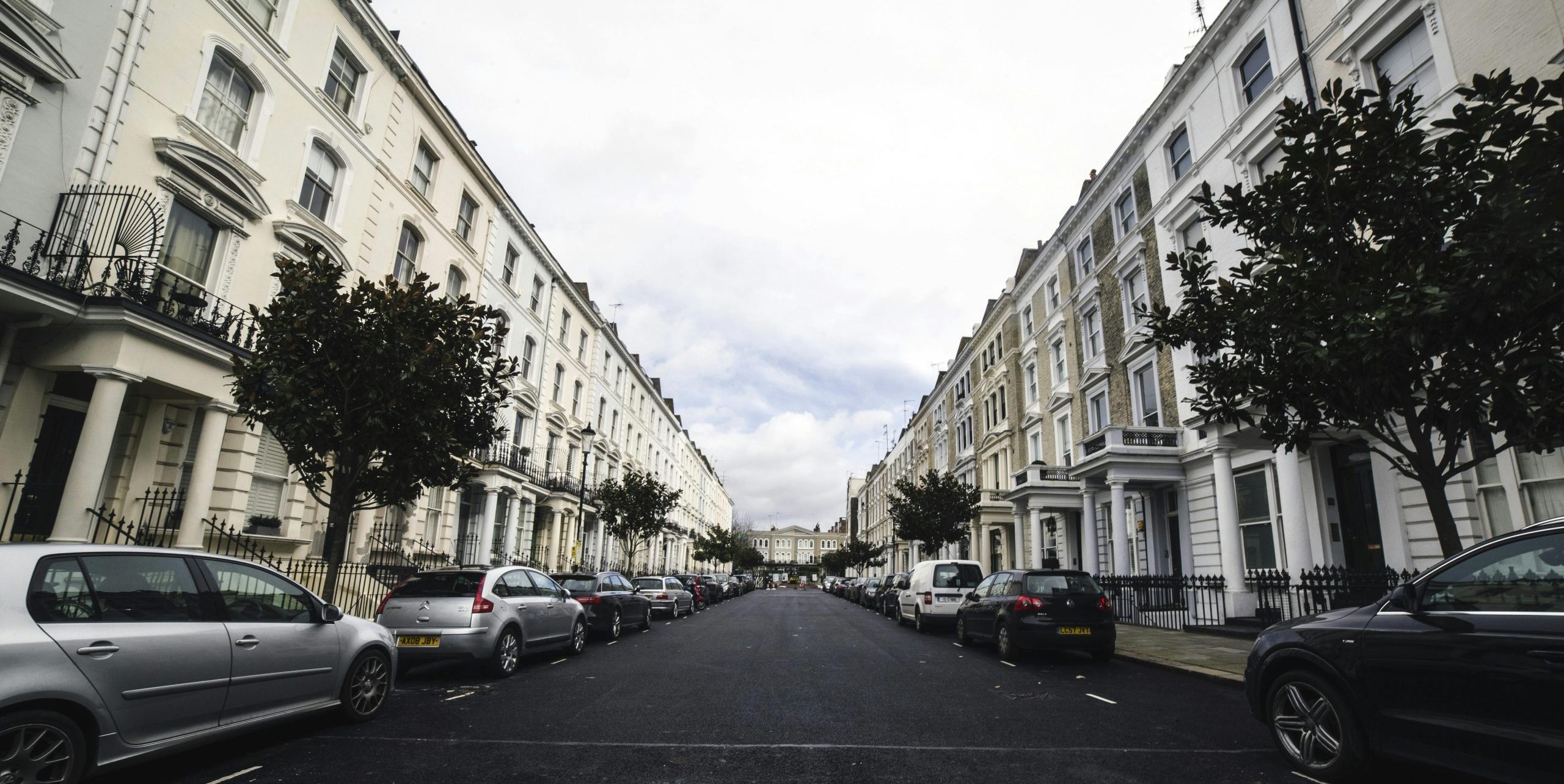
Britain’s Property Tax System Among the Worst in the Developed World
New international data has laid bare just how broken Britain’s property tax system has become.
According to the 2025 International Tax Competitiveness Index from the Tax Foundation, the UK now ranks 37th out of 38 OECD countries for property taxes - the second worst in the developed world, behind only Italy.
A tax system holding Britain back
The report highlights how the UK’s property tax system distorts investment and productivity by taxing homes and buildings through outdated valuations and inefficient structures. Homeowners and businesses face higher bills not because their properties are improving but because the system fails to reflect real, up-to-date values fairly across the country.
This broken design discourages mobility and deepens regional inequalities. By contrast, countries like Estonia and Australia, which have reformed their systems to make property taxation more transparent and consistent, rank top globally for property tax design.

The heaviest property tax burden in the OECD
The UK also places the heaviest property tax burden in the OECD, collecting 2.6% of the country’s private capital stock through property taxes - far higher than the next-closest nations, the United States (1.8%) and Canada (1.6%).
That means British households and businesses are paying more through inefficient property taxes than almost anywhere else in the developed world.
A clear case for reform
Fairer Share has long argued that Britain’s property tax system - still based on 1991 house prices - is outdated, unfair and economically damaging. Families in modest homes in towns like Blackpool and Sunderland are paying far more than people in multi-million pound properties in London and the South East.
The Tax Foundation’s findings back up what millions of households already know: Britain’s property tax system is failing.
Replacing Council Tax and Stamp Duty with a simple Proportional Property Tax would create a fairer, more efficient system that supports local government, encourages investment, and boosts regional growth.
It’s time to fix Britain’s broken property tax system and make sure every household pays their fair share, based on what their home is really worth today.